

On Ditching the Text and Subversive Teaching
For many years I taught undergraduate level sociology at Florida Southwestern State College (Edison State College when I started) and Florida Gulf Coast University. I taught Introduction to Sociology or Principles of Sociology, Contemporary Social Problems, and Multicultural Issues/Race and Ethnic Relations. Each course at each institution had a pre-selected textbook.
I used to scoff at the textbooks. I mused that there was only one Introduction to Sociology textbook ever written, and every other Introduction to Sociology textbook published after that was just slight variation of the first. While this wasn’t entirely fair, it wasn’t much off the mark.
When I finally gained enough clout to be involved in the textbook selection process, my criteria was simple. I asked, “what is the cheapest book for the students?” Whatever that book was, it was my suggestion. It didn’t really matter to me. I always knew my content, so I never taught from the textbook.
On the first day of class, I always told my students that at no point in the semester would I assign a reading from the text. I would never ask them to turn to page suchandsuch. All the materials I wanted them to read or access were on my website. Having a textbook was a good idea because it was a valuable resource for any work being done outside of class. It was also a good tool for pre-loading some information before class (a strategy few students ever used).
With this in mind, any textbook would do. My advice to my students was, “go cheap.” If Newman’s Sociology: Exploring the Architecture of Everyday Life, 7th edition was the required text1 but they could get the 6th edition for half the price, or the 5th edition for a quarter of the price, or their sister took sociology three years ago and kept her edition of Kendall’s Sociology in our Times, any of those options was fine. They could all be used for the same purpose. Maybe some of the graphs were out of date, but there was not enough difference between any two texts to make a difference.
I also told them that if they said anything about this to a dean or an administrator that I would lie on them like a cheap rug! My philosophy on textbooks was not well received by the higher ups.
Enter Herr Ron DeSantis.
My approach to teaching sociology, and my hook to my students on day one, was that sociology is the study of human freedom. Yes, I gave the more boring sociological definition of sociology: the study of social life, social change, and the social causes and consequences of human behavior. Don’t worry. But when I broke down the sociology’s focus, it boiled down to looking at the extent and limits of human agency, and the myriad external forces that push us ever so subtly, or not so subtly, in directions that we may or may not want to go. The sociological imagination that I promised to impart to my students was, as I billed it, their primary tool and go-to weapon in constructing and defending their own freedom and the basic human dignity of all whom they encounter every day.
I truly believe this.
Which is exactly why authoritarians like Ron DeSantis and the MAGA movement he represents hate sociology.
A couple years ago, sociology was eliminated from the general social studies courses offered at Florida state colleges and universities. MAGA had declared war against sociology.
Specifically, the Free State of Florida has a problem with any field of study that identifies social inequalities like racism, sexism, homophobia, or any other ism or phobia as at all structural or “systemic.” Here in the Free State, students are legally “free” from having to think about the systemic nature of inequality. It must be a huge relief! However, systemic inequality is a huge feature of what sociology studies. So, if you happen to teach a sociology course, you’re not so free in the Free State.
This state imposition on an academic discipline meant that any introductory text must be censored rewritten in accordance with the regressive law. The result is an open-source text called Introduction to Sociology. It’s a mess!2
The first thing a sociologist notices upon scanning the Table of Contents is that the standard chapters on inequality, Race and Ethnicity, Gender Sex and Sexuality, as well as on Social Stratification, and Global Inequality. MAGA also eliminated the chapter on Media and Technology. The concept Social Control was de-emphasized in the chapter on Deviance and Crime.3
Look, a sociology text that does not address inequality and stratification is simply not a sociology text. A letter signed by faculty members at FIU correctly points out that, “Not only are these omissions an incorrect representation of the field, but they also fail to prepare students for majors and graduate education that require or recommend introduction to sociology.”
FSU sociology Dawn Carr participated in the work group responsible for releasing this abomination. Having a real-life sociologist on the team lends the text a certain professional legitimacy. Except it doesn’t. “This was the most unpleasant task I’ve ever had to take on in my entire career,” Carr stated. “What was put on our shoulders was saving our discipline and saving our colleagues’ jobs,” Carr said. “We were told if the course was canceled, it will be very hard to get it back in as a core course. So we needed a stop-gap solution, and this is a stop-gap solution.”
Nice little academic discipline you got here. Be a shame if something happened to it!
In other words, they were coerced into releasing this text.
So, what is an undergraduate sociology professor to do?
The easiest solution is what I did for years. Ditch the text and teach what you know. Many years ago, a teacher trainer I knew told me in confidence that sometimes a teacher has to be subversive. This is most applicable in an authoritarian state. Of course, subversive teaching is especially difficult in the Free State where union and tenure protections are notoriously week, and the classroom level of surveillance is particularly strong.
Students in my class were willing to keep their mouths shut about my approach to textbooks because I was saving them money. Everyone loves it when someone saves them money. In MAGAland, however, it’s very likely that a student exposed to truths that make him/her uncomfortable will not keep their mouth shut and you may find yourself on a TPUSA blacklisted, doxed and reported to the dean for breaking the law.
There’s no easy answers. Subverting authoritarianism always involves risk. That’s why it is incumbent upon those of us who no longer answer to the state to step up and make sure this banned content is available. That’s why I created The Underground Classroom. To make sure that teachers in medieval states like Florida can provide their students with content that they would otherwise be afraid to teach.
There’s a lot I need to cover on this website, and it is just me at the keyboard. This is not some well-funded program. If you are a sociologist inclined to help, I do accept Guest Contributions. See the website for details. In the meantime, interested teachers can do to the Mr. A’s Classroom page, and click on Introduction to Sociology Course 1: The Sociological Perspectives to see a list of open-source sociology texts that do include the chapters on inequality and social stratification.
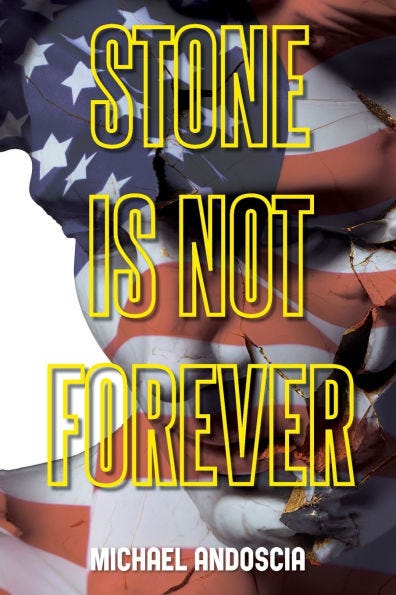
If you are interested in sociological concepts incorporated into fiction, you’ll hit the motherload with my novel Stone is not Forever. This is the story of a young Italian man making his way to the United States at the turn of the 20th century in search of opportunity and freedom from the vile padrone of his village. Purchase your copy today on Barnes and Noble or wherever you buy books!
Footnotes
- This one was one of my favorites, and for a brief period it was the cheapest in paperback version.
↩︎ - I’m not sharing the link because…it’s a mess! It is, however, based on this open-source text. Click Here.
↩︎ - Social control is mentioned briefly about twenty-two times in the text. ↩︎
 Mr. A's Underground Classroom