

Making Sense of this not so Sudden Conflict
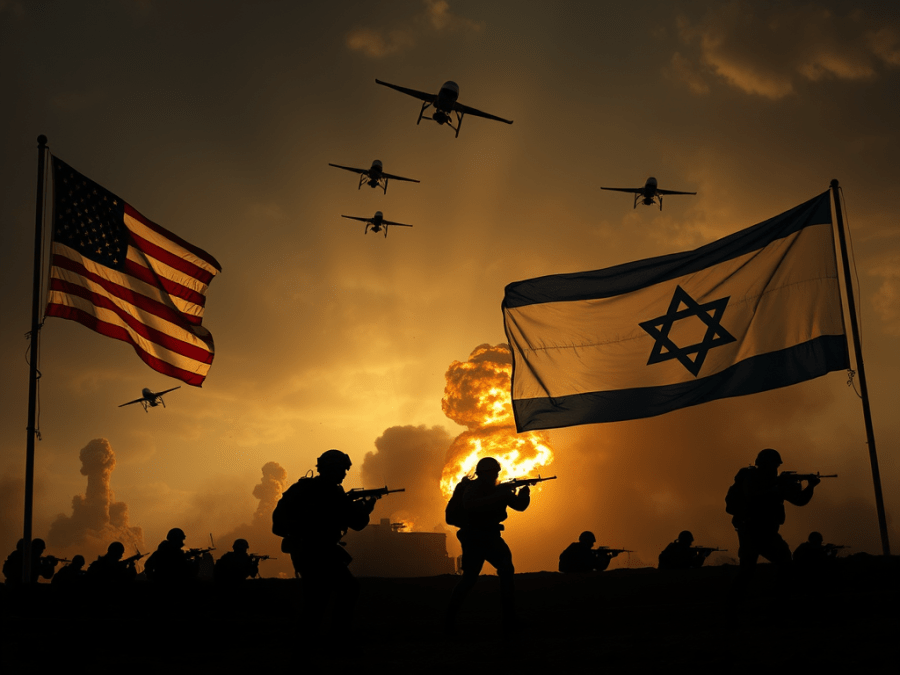
The U.S./Israeli War with Iran
Curriculum Specifics
- Course: History, U.S. Government
- Educational Level: Upper Grades High School, Advanced High School, Undergraduate
- For a 9th Grade Version, Click Here
- For a 6th Grade Version, Click Here
- Reading Level: 10th grade
- Reading Time: 30 Minutes
Introduction
This essay is targeted for social studies teachers, or any trusted teacher who may be trying to field questions on a brand-new war with Iran. It is also for history students interested in understanding the complexities of our current conflict with Iran. This is especially for the student who may have been told by her teacher that he can’t really answer questions on this topic. Unfortunately, in states like the Free State of Florida,1 such questions put teachers in a bind. Officially, teachers are expected to just share the facts and offer “both sides” when dealing with controversial issues like a war. Realistically, in such states, if a teacher is merely perceived as offering even a whiff of criticism of this administration or this political movement, they may find themselves in trouble.
This is especially vexing because “the facts” justifying this war are pretty weak. Outside of the current administration, even among right-wing circles, the U.S./Israeli war against Iran is soundly condemned. Yet the war persists, destabilizing the region, and impacting the global economy. This war has already resulted in American deaths. On the very first day of strikes almost two hundred innocent schoolgirls were killed.
Students will have questions and deserve to have those questions answered. Questions are often the manifestation of underlying concerns that well-read and qualified teachers can address. Talking about a current and ongoing war in a classroom setting, however, is especially fraught because many students have family members who are serving in the armed forces, some of whom may even be in harm’s way. It’s important to be sympathetic to these conditions. That’s why I like to emphasize policies and historical background when I respond to student questions.
Furthermore, with a current story like this, it is a great time to teach students how to access historical thinking skills to understand the present. It’s also a great time to demonstrate the value of historical interrogation of documents and evidence. This topic, albeit controversial, can be addressed in a meaningful and academic way.
This explainer is available to any teacher who might want a quick brush up on the issues knowing that they will likely face questions in class. It is especially designed for the embattled social studies teacher in oppressive environments. They can point to this link if they are afraid to address the topic themselves. It should go without saying that this essay should be only one of multiple sources a teacher may wish to share with concerned students.
Historical Background
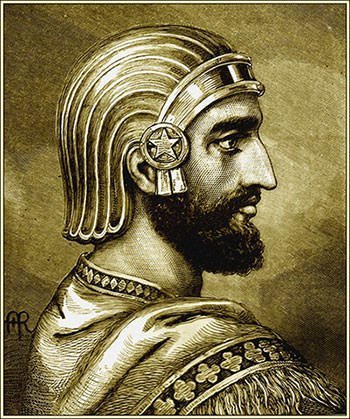
It’s impossible to offer anything close to a full historical background on Iran in this short essay. Iran, known to western culture as Persia, is one of the world’s oldest continuous civilizations. One of its earliest leaders, Cyrus the Great, is among history’s first conquerors, expanding a multicultural empire from Egypt to India, held together by one of the world’s first influential legal systems. Iran was, for millennia, a center for culture and learning.
By the 8th century, Iran was fully incorporated into the Arabic Islamic expansion, namely the Umayyad and Abbasid Caliphates. Persian culture continued, though heavily influenced by Islam.
In the 16th century Iran fully embraced and became the center for the Shi’a branch of Islam. This is important because Western commentators often paint Islam with a single brush. However, like Christianity, Islam has many branches, of which Shi’a is one. Questions are often the manifestation of underlying concerns that well-read and qualified teachers can address. Shi’a Islam branched off due to a dispute after the Prophet Mohamed’s death. One group, what became known as the Sunni, believed that Mohamed’s best, most trusted confidante, Abu Bakr should lead Islam. Those who became Shi’a believed that only Mohamed’s descendant, Ali was qualified to lead the religion. The conflict became violent, culminating in the Battle of Karbala in which Ali’s son was killed and Sunni Islam became dominant.
Shi’a cultures continued and expanded despite this defeat. The rise of the Safavid Empire in the 16th century elevated Shi’a as the official state religion. Specifically, Iranians embrace what is called Twelver Shi’a. True to original doctrine of following Mohamed’s descendants, Shiites followed Imams, Islamic leaders who could trace their lineage to The Prophet through Ali and his wife Fatima. Unfortunately, the Twelfth Imam, Muhammad al-Mahdi, disappeared in the 9th century. According to doctrine, he never died. Instead, he is remaining hidden until the right time for his return as a Messianic figure after which he will–yep, you guessed it–create a peaceful and just world order. Until that time, Shi’a legal scholars known as Ayatollah’s are designated religious leaders. Specifically, the Grand Ayatollah stewards Shi’a until al-Mahdi’s return.
Put a pin in this notion. It will come back later in this essay.
This ancient background sets the stage. Iran’s more modern history, however, is the backdrop for today’s crisis. Before World War I, Iran was a buffer state between Russian expansion and Britain’s “Crown Jewel” colony in India. Iran also had lots of oil. Iran found itself caught in the Great Game between Russia and Great Britain. Consequently, despite Iran’s proclamation of neutrality in World War I, it became a major battlefield between allied Britain and Russia against the Ottoman Empire aligned with the Central Powers. Iran was devastated as a result.
In 1921, Reza Khan seized power over the collapsed Iranian state and established the Pahlavi Dynasty, crowning himself Shah (king) in 1925. He ruled for sixteen years, but was forced to abdicate in 1941 because…wait for it…Britain and the Soviet Union (Russia) didn’t trust him and wanted the oil.
Did I mention Iran had lotsa oil?

In 1941, Britain and the Soviet Union occupied Iran and installed Reza Shah’s more amenable son, Mohammad Reza Pahlavi as Shah. During this time, Iran instituted a thriving secular parliamentary democracy. In 1951, a fella named Mohammad Mosaddegh was elected Prime Minister. He was a nationalist running on a platform that Iranians as opposed to British oil companies should benefit from their own oil. Toward that end, he set out to nationalize Iranian oil.
Did I mention Iran had lotsa oil? Oil that “belonged” to British companies. A fella like Mossaddegh was not popular with Britain despite his popularity among Iranians. It turns out that the whole Iranian secular democracy thing was just too unpredictable for British and American interests. It had to go. In 1953, Kermit Roosevelt Jr.2 coordinated the CIA and Britain’s MI6 in instigating a coup to overthrow Iran’s democratically elected government. Mohammad Reza Shah was restored as an authoritarian ruler and Britain got to keep its drilling rights.
Reza Shah’s second reign turned out to be brutal. He used his SAVAK, a secret police trained by the CIA, to violently impose his will. Dissident groups, Islamists, Leftists, and Nationalists were all subject to disappearing, imprisonment and torture. Regardless, the United States and Britain supported the Shah’s increasingly authoritarian regime as an important Cold War ally and source for oil.
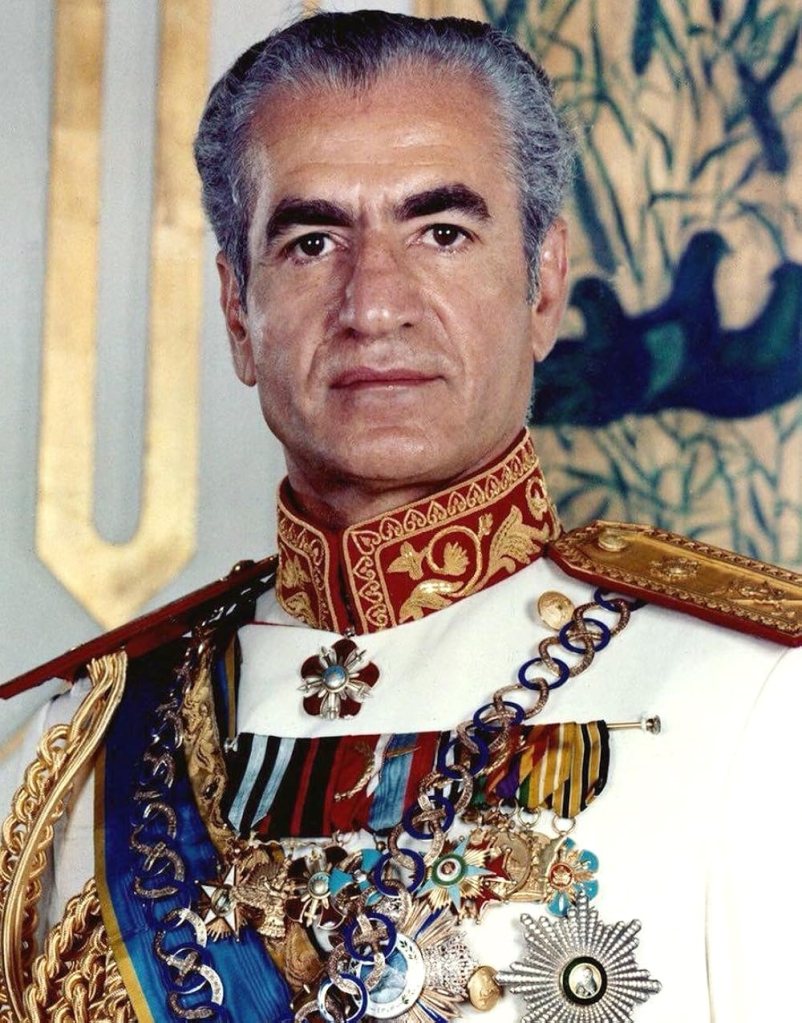
The Shah’s brutality came to a head in 1978. Iranians of all political stripes took to the streets in 1978 to protest his regime. Demonstrations were so widespread that they shut down Iran’s all-important oil industry. Reza Shah, who unknown to the rest of the world was dying from lymphoma, was indecisive in his response to the protests.
The kiss of death to the Pahlavi Dynasty came in 1979 when Iranian soldiers refused to fire on protesters. When an authoritarian government loses control of the army…it’s game over.
At this point, Reza Shah left Iran for the United States, ostensibly to receive treatment for an “illness.” This was the end of his reign.
Now it’s important to understand that the 1979 Iranian Revolution was not specifically an Islamist uprising. It was a coalition including a diverse array of forces disaffected by the Shah’s oppressive reign. However, Shiites under the leadership of the exiled Grand Ayatollah Khomeini was the most cohesive group in this coalition. The downfall of an authoritarian often creates what historians and social scientists call a power vacuum in any given society. When this happens, those movements and their associated leadership best positioned to fill that vacuum tend to take charge.3 In 1979, when Ayatollah Khomeini returned from exile, it was the Shi’a Islamist groups that were best positioned to take over.
That being said, the one thing that all the groups in the coalition had in common was a hatred for the United States. They hated the United States for its support of the Shah and his merciless SAVAK. When the Shah fled Iran for the United States, the revolutionaries demanded, in a singular voice, that the fallen autocrat be returned to stand trial. To make their case clear, a group of revolutionary students stormed the U.S. embassy and held everyone inside hostage. They demanded the Shah’s return. The United States was not inclined to concede to an act of terrorism. The stand-off lasted 444 days and was a significant embarrassment to the Carter Administration.4
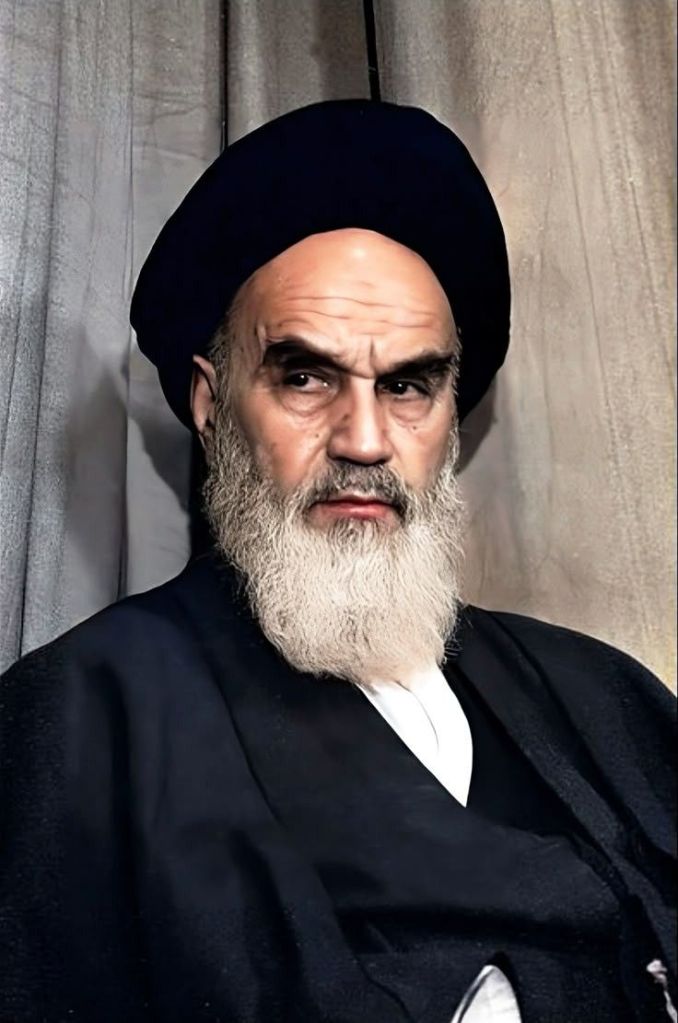
Fig 4: Ayatollah Khomeini 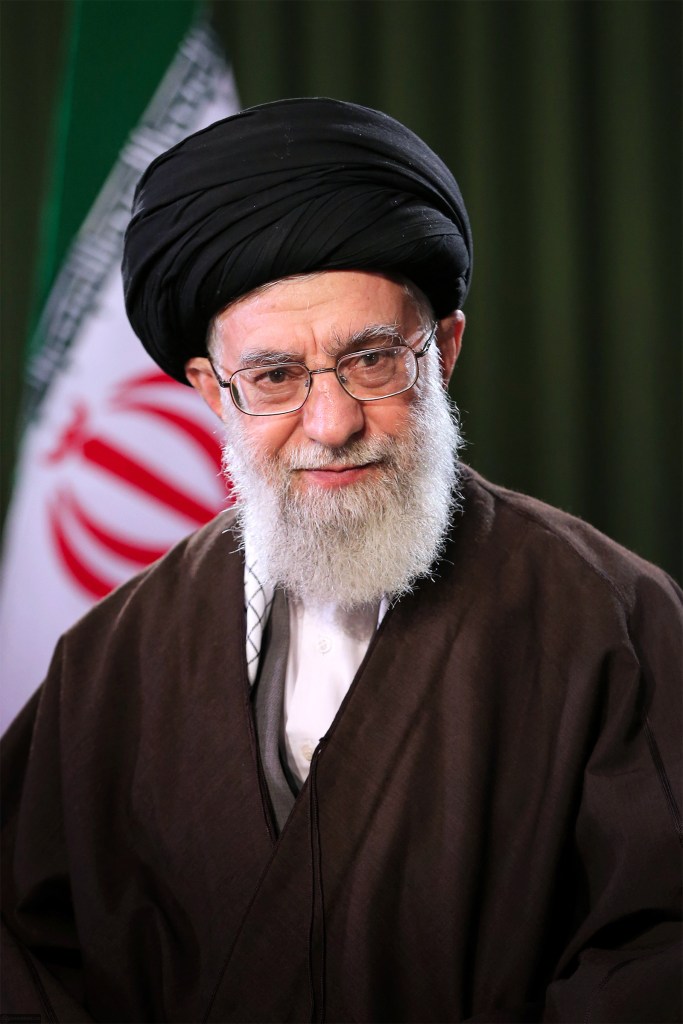
Fig 5: Ayatollah Khamenei
Ayatollah Khomeini solidified an extremist theocracy in which rights, especially for women, were curtailed. Thousands of political opponents were executed. During this time Iran was involved in a devastating war with Iraq that killed as many as a million Iranians. When Khomeini died in 1989, the title of Supreme Leader was conferred on Ayatollah Khamenei, an equally relentless and oppressive theocrat.
Despite the Iranian government’s commitment to theocracy, or perhaps because of this theocratic entrenchment, the Iranian people are becoming increasingly secular. Over seventy percent of Iranians support separating Islam from the state and would prefer a secular government. Numerous secular reform movements, including the Green Movement of 2009, as well as recent protests were violently crushed. As many as thirty thousand protesters may have been killed in last month’s sustained demonstrations.
Iran’s current regime is nothing to celebrate.
That Brings Us to Today
So, here we are. Iran’s long and storied history has culminated in this moment. Yes, Iran is an oppressive autocratic regime that it’s own people would prefer going the way of the dodo. That being said, there are plenty of oppressive regimes with whom the United States does not go to war. Indeed, there are oppressive even theocratic regimes that are stalwart allies of the United States. Saudi Arabia comes to mind.
Regardless, on February 28, 2026, the United States and Israel launched coordinated attacks against Iran.5 The attacks were substantial. Officially, the United States targeted military installations, nuclear facilities, and political leadership. The strike succeeded in killing the Supreme Leader, Ayatollah Khamenei.
However, this is a war, and major military operations do not always hit their intended targets. According to the White House, it also inadvertently killed some political leaders whom the U.S. government may have been willing to support in taking over the Iranian state. “Most of the people we had in mind are dead,” Trump told reporters Tuesday. “So, you know, we had some in mind from that group that is, is dead.” The U.S./Israel alliance has also been soundly criticized for blowing up a girl’s elementary school in Minab, killing almost two hundred young girls and their teachers.
As it stands, there has not been a formal declaration of war. The Constitution specifies that only Congress can declare war. That being said, the United States has been involved in a lot of military conflicts that were not formally declared wars. Throughout U.S. history, Congress has deferred to the President’s authority as Commander-in-Chief of the armed forces. Most military conflicts, regardless of president or the president’s party, never enjoyed a formal declaration from Congress. So, the President’s actions are not outside of the historical precedent.
With that in mind, the Vietnam War was a turning point in Presidential power to send soldiers off to war. Like many other American conflicts, combat in Vietnam was never an officially declared war.6 Unlike previous military conflicts, however, it was disastrous for the United States. As a result, Congress passed the War Powers Resolution (WPR) in 1973. This law limits and defines the conditions under which the President can send American soldiers into combat. According to the WPR, soldiers may be sent into combat under three conditions. First, if Congress declares war. Secondly, if Congress has given specific statutory authorization, referred to as an Authorization to Use Military Force (AUMF).7 Finally, if there is a state of emergency requiring the President to act, troops can be deployed without Congressional approval.
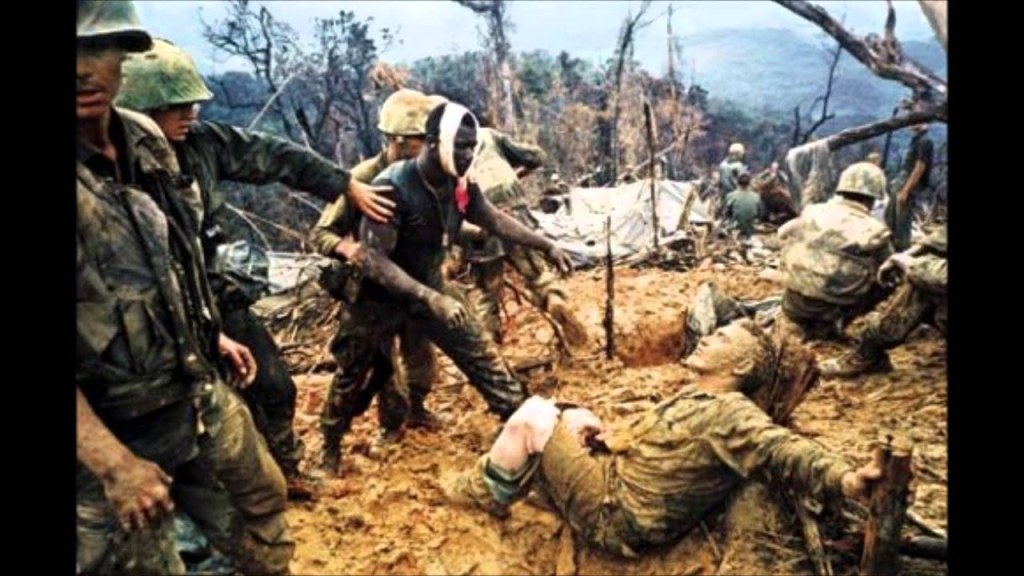
If soldiers are committed to action without Congressional approval, however, there are more limits. First the president must submit a formal notification to Congress within forty-eight hours. The President has done this with regard to Iran. After that, without Congressional approval, the president can only keep soldiers in the field for sixty days. This is a so-called “sixty-day clock” After which he has thirty days to withdraw. According to The WPR, without Congressional approval, soldiers can be committed to combat operations for no more than ninety days.
Realistically, however, it’s very difficult for a Congress to withdraw support for military operations that have already been going on for two months. As it stands, Congress has never successfully imposed the sixty-day limit on a president despite opportunities to do so. If history is precedent, and I believe it is, Congress will not be able to intervene in the Iran War even if it wants to. And it doesn’t seem like it wants to. A bill was submitted to end this war, the Massie-Khanna Resolution demanding the immediate withdrawal of U.S. forces from hostilities in Iran. It did not pass the Senate or the House.8 So, the president’s authority is not being contested in any meaningful way.
The Administration’s Line
One question is, did the president act according to the letter of the War Powers Resolution when he committed forces without Congressional approval? In other words, was the president responding to an imminent threat on the part of Iran? This is where things become less clear.
The Administration claims that Iran had revived its nuclear program, and that its ballistic missile program constituted a threat to Americans abroad as well as to dedicated allies like Israel. During his speech on February 28th, the President also cited Iran’s support for militant proxy groups like Hezbollah in Lebanon, the Houthis in Yemen, and Hamas in Gaza. Furthermore, the Iranian government was responsible for the deaths of thousands of protesters. The President had threatened to take action in the event the protesters were attacked. According to Press Secretary Karoline Leavitt, “The president had a feeling, again, based on fact, that Iran was going to strike the United States was going to strike our assets in the region, and he made a determination to launch Operation Epic Fury based on all of those reasons,”
Is “a feeling” a strong enough reason for engaging in an unpopular and complex war? Critics point out that much of the Administrations claims of an imminent threat to the United States were not sustainable. About a year ago, the Director of National Intelligence, Tulsi Gabbard, reported that “The [Intelligence Community] continues to assess that Iran is not building a nuclear weapon.” To which the President responded, “I don’t care what she said.” Toward that end, in June of last year the President launched a missile attack that he claimed had obliterated Iran’s nuclear program. Did Iran reconstitute that program in just a few short months? As for Iranian missiles, the Defense Intelligence Agency reported that Iran’s missile carrying capacity was no more than two-thousand miles. A threat to American allies in the Middle East, but certainly not an imminent threat to the United States.
To many of us who witnessed the propaganda building up to war with Iraq, there seems to be some troubling parallels. Like the Bush/Cheney/Powell cabal, the administration seems to be exaggerating the threat and flat out lying about Iran’s capacity to strike the United States. Israeli Prime Minister Benjamin Netanyahu is an ominous case study. For at least thirty years, the Israeli Prime Minister has insisted that the United States must act now because Iran was on the verge of developing nuclear weapons. His claims were clearly false. For this reason, critics are arguing that the President must provide more evidence than just his “feelings.”
It is unclear why the President has committed American forces to this military adventure. On one hand, he has a long history of saber rattling, especially with regard to Iran. On the other hand, his presidential campaign emphasized no new wars, no regime change missions. He seemed to have his eye on the Nobel Peace Prize, though he was admittedly upset when he didn’t get it. He declared that he, “no longer feels an obligation to think purely of peace,” as a result of being denied this prize. He even created a much-derided Board of Peace. Yet barely a month later launches a devastating war.
Wars, however, do not emerge from nowhere. There are always causes, influences or incentives when nations go to war. Though it is unclear what the current motivation is, we can offer some speculations based on the facts we know. That being said, if we are being honest, we must admit that they are speculations. The best we can do is speculate based on available evidence.
Political and Diplomatic Factors
Anyone who has taken a history course is familiar with the process. You’re assigned to look at the causes of a war. The teacher instructs you to break your explanation down into categories. They ask you to do that because it is a useful practice when trying to analyze historical causation. The standard historical categories can usually be remembered as SPICE (Social, Political, Interactive, Cultural, Economic), or my favorite, PIRATES (Political, Interactive, Religious, Arts and Culture, Technology, Economic, Social). For our purposes I just want to look at PRE (Political, Religious, and Economic) factors that an analyst may want to focus on when it comes to the Iran War.9
The most potent political factor encouraging war with Iran is the U.S. alliance with Israel. It is clear that Iran does not pose an existential threat to the United States. It must be noted that any nation can inspire terrorist attacks, however, Iran is far from powerful enough to constitute more than a marginal threat to the United States. It is, however, powerful enough to constitute a threat to Israel. Regardless of one’s position on this arrangement, Israel is one of the United States’ most dedicated allies.10
Israel is currently engaged in an internationally condemned campaign against its Palestinian population in Gaza and the West Bank. On October 7, 2023 Gaza’s ruling party, Hamas, launched an unconscionable, depraved attack against Israel, killing over twelve hundred people and taking more than two-hundred and fifty people hostage. When Israel responded militarily, the international community understood the response even if they did not condone the violence.
The violence escalated, however. To most observers, Israel’s retaliation crossed the line from a proportionate response to flat out ethnic cleansing or genocide. Israeli human rights organization B’tselem was not the least of such organizations to condemn Netanyahu’s relentless violence against Palestinians in Gaza. In the West Bank, Israel took advantage of the animus against Palestinians to step up its settlement program there. This program was ruled a violation of international law by the U.N. and is condemned as apartheid and ethnic cleansing. Still, it persisted for years with countless Palestinians dispossessed as well as subject to state sanctioned settler violence.
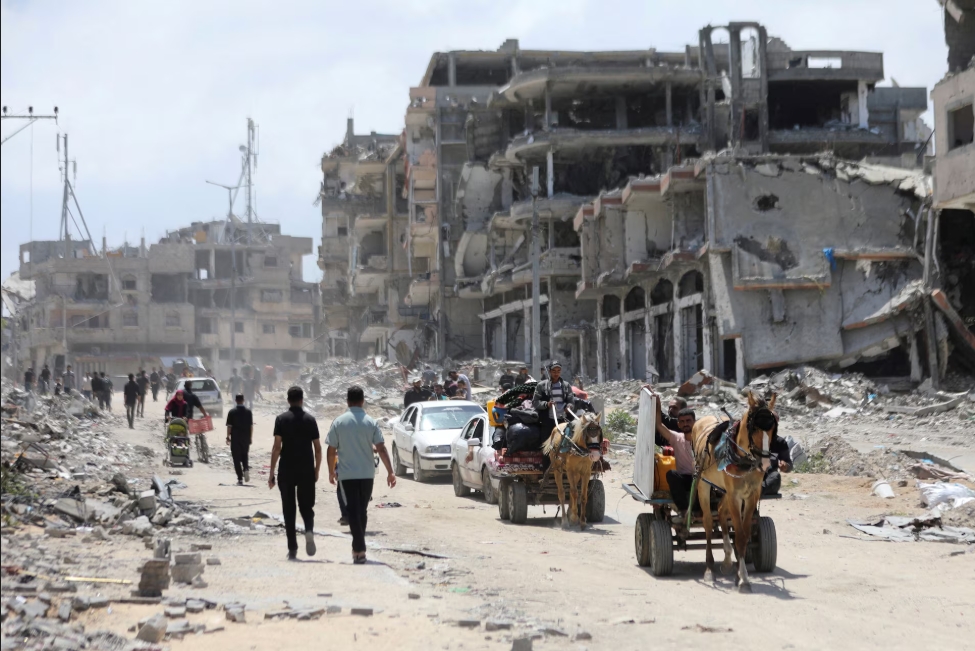
Israel’s inhumanity toward Palestinians has discredited it to the international community, leaving it especially vulnerable to Iran’s provocations. Netanyahu has always identified Iran as its biggest threat in the region. Now, as a result of his own brutal policies, that threat may have teeth.
Furthermore, Iran has been central to supporting a network of Shiite militant groups throughout the Middle East. As well as Hezbollah, Hamas, and the Houthis, Iran is in the middle of a web of Shiite groups in Iraq and Syria. This network is referred to as Iran’s Axis of Resistance. This Axis is currently active and lashing out in response to attacks against Iran and especially the death of Ayatollah Khamenei, an important religious figure. Many of the groups incorporated into this Axis of Resistance are sitting on Israel’s borders.
The diplomatic precursors of this war are much more tragic. Iran is often presented as being a nation of religious extremists unwilling to compromise with the Great Satan. A common refrain is there is no way to negotiate with “those people.” They are beyond reason. This claim is betrayed by the facts. Despite decades of conflict and sanction, the United States and its allies successfully negotiated an agreement with Iran in 2015. This agreement, The Joint Comprehensive Plan of Action (JCPOA) was designed to allow Iran to develop nuclear technology for domestic purposes,11 while creating effective accountability measures ensuring that this technology was not being upgraded for weapons and military use.
Unfortunately, the legal status of an “agreement” in the United States is not the same as it is for a “treaty.” The Obama Administration was never able to get the JCPOA through the Senate as an official treaty of the United States.12 Because it was only an agreement, our current president was able to back out of it during his first term. The President was always opposed to the JCPOA, claiming it was an awful deal that hurt the United States. Little empirical support was offered for this position. Furthermore, analysts almost unanimously agreed that the agreement was working as expected. That did not stop the United States from jumping ship in 2018. It was only after 2018 that Iran started violating the agreement.
Despite this, Iran did eventually come back to the negotiating table to preempt the current war. Right up until the moment of the Joint U.S./Israeli attack it seemed that an agreement with Iran was within reach. Iran was willing to enter into an even stronger agreement than the JCPOA according to those involved in the negotiations hosted by Oman. It seemed the only choke point was the U.S. insistence that Iran give up all of its ballistic missiles. Iran responded that doing so would leave it helpless in the face of a future attack. They were correct. The central component of Iran’s defenses in the face of the current war has been its missile and drone stockpiles.
Economic Factors
Did I mention that Iran has lotsa oil?
That oil is a potential source of great wealth for Iran. There is only one problem. That oil has been subject to economic sanction for almost forty years. But for a short respite after the JCPOA was signed, Iran has not been able to sell its oil openly on the global market. Of course, just because one can’t do something openly doesn’t mean they are not doing it. Oil is Iran’s main source of wealth. Yes, it’s going to sell it to willing buyers. And there are willing buyers, like China and Russia. Iran makes it easy to buy its oil by allowing purchases in currency other than dollars. That seems reasonable, but it constitutes a significant threat to American economic dominance. You see, it is agreed throughout the world that all oil will be purchased using dollars (for more detail on this see Filling Your Gas Tank).
To put this in perspective, there are four nations that were willing to sell oil in exchange for something other than dollars since our modern oil market was created to support what have become known as petrodollars. Iraq tried to do so in 2000. That didn’t go so well. Venezuela, another nation being crushed by U.S. sanctions, tried it recently. That didn’t end well. Now Iran. The only nation to get away with it is Russia, a nuclear nation…also under sanction for understandable reasons. The United States takes its Petrodollars very seriously.
Regardless, but for a couple years after the JCPOA, Iran’s immense economic potential has been stymied by the United States and its allies for almost forty years. There are two expressed goals associated with these sanctions used by all U.S. presidents from both parties for decades. First, sanctions are intended to make life so miserable for Iranians that they rise up and overthrow their government. This strategy has plenty of historical precedents since World War II, but a dismal track record. With the possible exception of South Africa,13 economic sanctions simply do not work as a means of toppling a government. Rather, they tend to have a “rally around the flag” effect by which the national leadership can blame all of a population’s sorrows on an external enemy like the United States.
The second expressed goal is to force Iran to the negotiating table. However, negotiation is a two-way street. From Iran’s perspective, they came to the negotiation table in 2015 and entered an agreement with the United States and allied nations. That was good for a couple of years until it was torn up. There was some limited back and forth with the Biden Administration, but nothing of substance. Then Iran returned to the negotiation table after being bombed in 2025 and showed that they were willing to make serious concessions. Now that agreement was set on fire before it was even finished. What are the chances of sanctions leading to negotiation going forward?
In the meantime, instability in the Middle East is always economically fraught. This is especially true with regard to Iran. Iran controls the Strait of Hormuz, a major choke point for about forty percent of the world’s oil and a good chunk of its Liquid Natural Gas (LNG). Big, lumbering and expensive oil tankers are sitting ducks against cheap attack drones. The more risk the oil tankers must take to cross that narrow strait, the more you pay at the pump. The more you pay at the pump, the more expensive it is to transport the stuff you want. The result is you pay more for all the stuff you want. That’s called inflation, and Americans famously hate inflation.
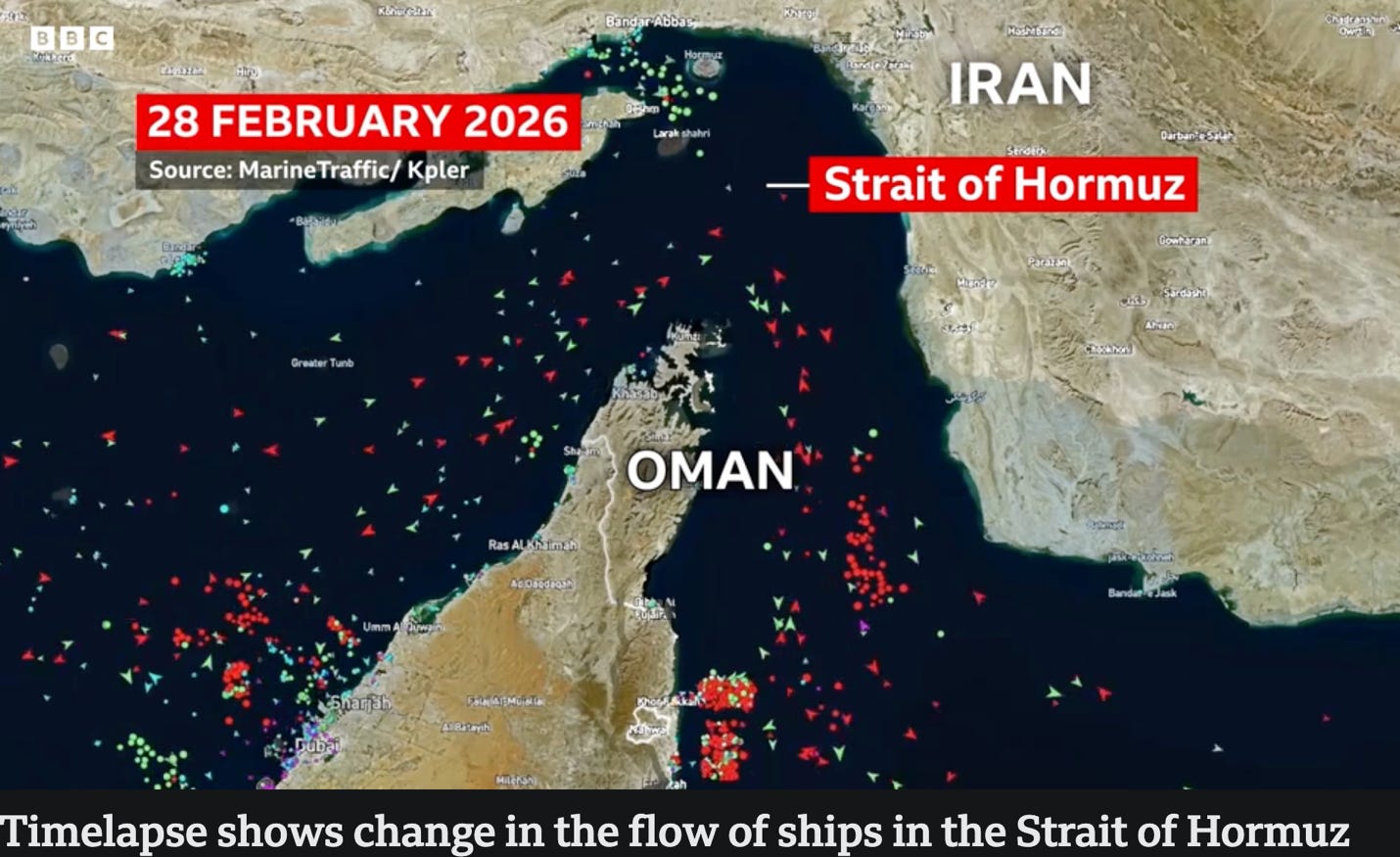
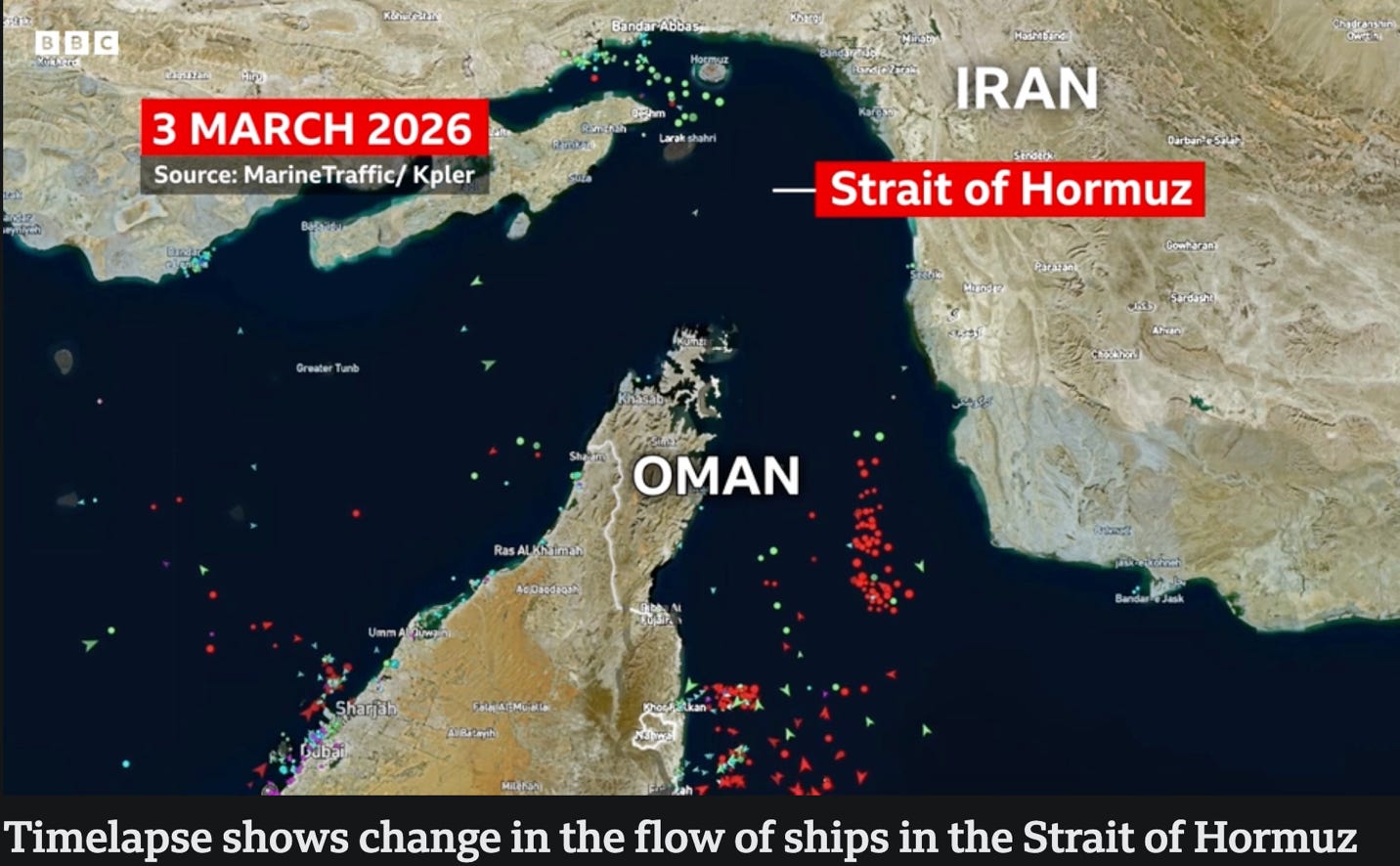
Now let’s put this in perspective. This may be troublesome, but it is not unworkable. The United States is not nearly as dependent on oil or LNG as it used to be. According to economist Paul Krugman, we may see inflation rise between .3%-1% as a result of this conflict. That sucks. Nobody likes inflation. However, it’s not devastating.
Religion and Culture
Finally, there is a religious component to the war. And if you are a student of history, you know that any given conflict is always worse when you stir in some religious orthodoxy.
For strategic purposes it is important to get a look at the religious profile of this conflict as it relates to the region. The dominant religion in the Middle East is Islam. As expressed earlier, however, Islam is not a singular category. Most Muslims in the Middle East are some variation of Sunni Islam. In other words, they follow the traditions laid out by the followers of Abu Bakr after the Prophet Mohamed’s death. The most dominant of the Sunni nations is Saudi Arabia, a stalwart ally of the United States. That leaves Iran isolated as the only nation in which Shiites have political dominance.14
That being said, such divisions are not nearly so clear cut. There are significant populations of Shiites in nations throughout the region, most notably in Iraq, Lebanon, Bahrain, and Pakistan (a nuclear nation). Might these Shiite pockets cause problems and spread instability throughout the Middle East? What might be the consequences for that?
Also, though Shiites are dominant in Iran, Shiite rule is increasingly unpopular. There’s a long secular tradition in Iran. There are also other cultural forces at work in Iran, including Arab, Turk, and Kurdish populations. Many in the administration, and supporters of this administration, hope that attacks against Iranian leadership may encourage these forces to rise up and challenge Shiite rule. Again, it’s impossible to predict how a struggle to fill any consequent power vacuum in Iran might play out. It’s a huge gamble.
Yet religion is a baked-in factor in Iranian politics. In constructing the existing Iranian Theocracy, Ayatollah Khomeini used fiery religious rhetoric to demonize the United States as The Great Satan, and Israel as The Little Satan. Opposition to the state of Israel and to Israeli Zionism is mandated by law and can be defended by Iran’s constitution. Now most Iranians do not hold such extremist views, however, having bombs dropped on you can be radicalizing. Will war further galvanize Iranian anti-U.S. and anti-Israel sentiment around extreme religious ideals? Might the Iranian government, reeling from the assault, use religious rhetoric to try and hold on to power?
The United States is not immune to religious rhetoric. Yesterday, March 5, Senator Lindsey Graham said “This is a religious war… We will determine the course of the Middle East for a thousand years.”
Not to be alarmist, but that reference to “a thousand years,” is called Millenarianism. Millenarians are dedicated to bringing on the thousand-year reign of Christ as described in the Book of Revelation.
1 Then I saw an angel coming down from heaven with the key to the Abyss, holding in his hand a great chain. 2 He seized the dragon, that ancient serpent who is the devil and Satan, and bound him for a thousand years. 3 And he threw him into the Abyss, shut it, and sealed it over him, so that he could not deceive the nations until the thousand years were complete. After that, he must be released for a brief period of time.
4 Then I saw the thrones, and those seated on them had been given authority to judge. And I saw the souls of those who had been beheaded for their testimony of Jesus and for the word of God, and those who had not worshiped the beast or its image and had not received its mark on their foreheads or hands. And they came to life and reigned with Christ for a thousand years.
5 The rest of the dead did not come back to life until the thousand years were complete. This is the first resurrection. 6 Blessed and holy are those who share in the first resurrection! The second death has no power over them, but they will be priests of God and of Christ and will reign with Him for a thousand years.
Revelation 20:1-6
In the United States, this is called Dominionism, the belief that the United States has a divine mission to support Israel toward bringing on the Jesus’s Second Coming and his divine reign on earth.
Now, was Senator Graham simply offering a rhetorical flourish, or is he a Millenarian or a Dominionist? I can’t say. He has used this “thousand year” frame more than once. On Fox and Friends he said, “This is our thousand-year moment…the pathway to peace and prosperity will be wide and long…there’s a new dawn coming in the Middle East.” However, such beliefs are consistent features of American Evangelicalism, Christian Zionism, and Christian Nationalism. These movements are central to contemporary Republican politics. Vice President Vance, Sec. Hegseth, and Speaker Mike Johnson are just some of the major political players in Republican politics who openly hold Dominionist views.
Mike Huckabee has expressed apocalyptic doctrine when he claimed to be fine with Israel taking over the whole Middle East. Benjamin Netanyahu referenced the Biblical story of the Amalekites as a lesson for war with Iran. “We read in this week’s Torah portion, ‘Remember what Amalek did to you.’ We remember – and we act.” In the Bible, the Israelites killed every man, woman, child, and animal in Amalek under God’s orders. It’s not the first time the Prime Minister has made this reference. Watchdog groups of the U.S. military have logged over two-hundred complaints that their commanders are using “end times” rhetoric in justifying their participation in the war. According to The Guardian, one NCO explained, “[our commander] urged us to tell our troops that this was ‘all part of God’s divine plan’ and he specifically referenced numerous citations out of the Book of Revelation referring to Armageddon and the imminent return of Jesus Christ.”
Um…Wow! This is disconcerting.
And it must be noted that Iran is no stranger to its own brand of “end times” rhetoric. It’s bad enough when one group of religious extremists are engaged in violent conflict. In this war, we have potentially three strands of religious extremism, intolerance, and fanaticism that can be whipped into a lather to justify inconceivable levels of death and destruction.
Now is a good time to remind the reader that two of the three nations directly involved in this war possess nuclear weapons.
The Takeaway
As it stands, it’s impossible to answer the question, “Why are we at war with Iran?” in any reasonable way in a classroom setting. The issues are complicated and, as is often the case when an administration is dedicated to war, the propaganda is thick. The best answer we can give, based on the available evidence, is that we are supporting an important ally.
Whether or not this support is the “right” course of action is, of course, a moral question that cannot be answered directly by the teacher.15 The teacher, however, can use this discussion as a powerful example of metathinking and applying the skills students learn in class to struggling with complex issues and moral responses to those issues.
History teachers, however, play a huge role in teaching students how to wade through the propaganda and to focus on what can be confirmed in the record as opposed to speculations and emotional responses to measured rhetoric. In a history class we can look at who the major players are. What might be their motives? What are some complicating factors involved? We can learn to see this issue from the perspective of those with whom we might disagree.
Most importantly, we can look at an examination of the facts as they materialize. What do we know? Is what our politicians are saying consistent with the facts before us? Is war the best answer to the underlying conflicts? Who benefits and who pays the cost? Most importantly, how do we solve this problem? These are questions that require an understanding of history, sociology, anthropology, and economics?
It will not be long before high school students will have to decide for themselves the positions they are willing to take on complex issues like this war. Teachers can help them by showing them how to use reason and evidence, in conjunction with consistent moral sentiment, to develop a position that is defensible. Teachers, as professionals, can do this without “indoctrination.”
Wagging the Dog?
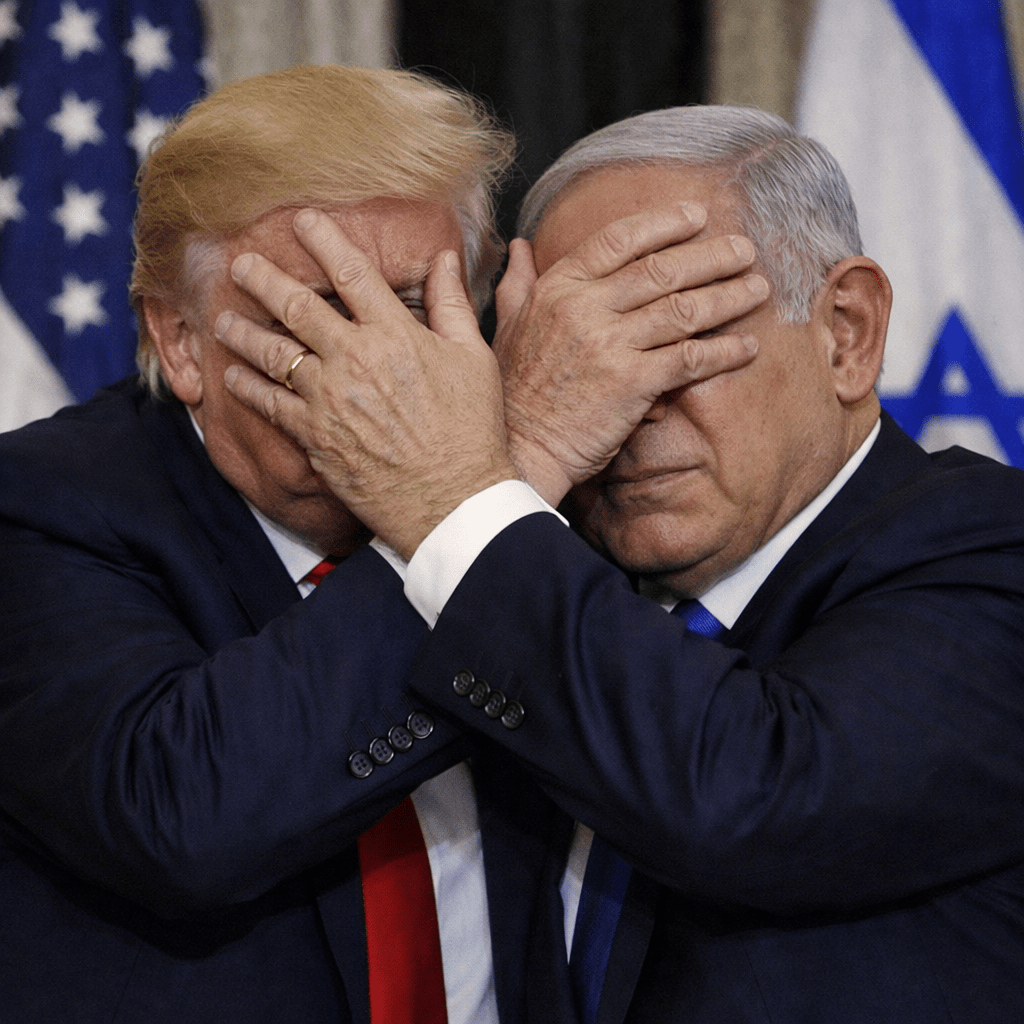
There is an elephant in the room that requires address. Both The President and Netanyahu are facing serious scandals. The President is looking at what many see as a cover-up of his relationship with Jeffery Epstein. Netanyahu is facing charges of corruption. There are accusations floating around that the Iran War is nothing more than a distraction to rally their respective countries around their leadership a manufactured crisis. The strategy is referred to as “Wagging the Dog.” It’s also a weak argument. Teachers should address this in terms of showing the difference between speculation, unsupported claims, and supported claims. (The image is AI)
Footnotes
- “Red” States ↩︎
- Teddy Roosevelt’s grandson. ↩︎
- When there is no one movement in a position to take over, the result is often a long period of civil war until one group emerges. Those folks who advocate for revolution need to be aware of this history. Successful revolutions often fall apart during this struggle. ↩︎
- Carter’s attempt at a military rescue, Operation Eagle Claw, ended in catastrophe, further painting Carter as helpless in the face of crisis. Just in time for the 1980 election! There is also compelling, though contested, evidence to suggest that the Reagan campaign actively undermined the Carter Administration’s negotiations to avoid an “October Surprise” that could have turned the election. See Here, Here, and Here ↩︎
- In the United States this is referred to as Operation Epic Fury. In Israel, it is Operation Roaring Lion. ↩︎
- Technically, Vietnam was not a “war” formally declared by Congress. Unofficially, come on…it was a war! ↩︎
- It was under AUMFs passed in 2001 and 2002 that the United States entered its longest wars in Afghanistan and Iraq. ↩︎
- These were almost party line votes, with Republicans almost entirely committed to the war, and Democrats opposed. ↩︎
- I’m calling it the Iran War. I have no idea what this war will be called when historians get their hands on it. ↩︎
- Critics of this arrangement are quick to point out the many times Israel has undermined U.S. interests toward its own ends. Regardless, the alliance between the United States and Israel is still a significant political factor in many American decisions regarding the Middle East. ↩︎
- There are a lot of peaceful uses for nuclear technology such as nuclear power and nuclear medicine. All of which requires some level of “enriching” uranium. The problem is that the enrichment process can be furthered to create weapons grade uranium that can be used in nuclear missiles and bombs. The goal of the agreement was to ensure that Iran was only enriching uranium to the point it could be used for MRIs and power plants. ↩︎
- This was one of those examples of Israel undermining the actions of a U.S. president. Netanyahu himself came to the United States to speak before Congress against the Iran Nuclear Deal. ↩︎
- And even in S. Africa, strikes and international pressure was likely more influential in toppling the apartheid regime. ↩︎
- Like Iran, Iraq has a majority Shiite population. However, Iraq is governed through shared power in a parliamentary system. This is very different from Iran or Saudi Arabia. ↩︎
- I’m a big believer that the teacher has the right to offer an opinion on moral questions. However, that teacher must be able to support that moral opinion with morally consistent claims and by sound empirical and rational argument. The teacher must also leave room for students to express and defend their own moral claims. In these matters, the teacher should defer to the thinking required for their course. A history teacher should be able to explain how an understanding of history, and historical thinking skills, can help inform and shape a moral claim. The teacher can use Metathinking to demonstrate the value of their particular course in understanding the real world and mitigating our moral responses to intensely emotional events. ↩︎
 Mr. A's Underground Classroom