About the Underground Classroom
The Underground Classroom used to be Mr. Andoscia’s Classroom. It was the website I used for the classes I taught in high school and college. The original intent was to create a one-stop shop for all the materials, readings, notes, syllabi, and supplementals for my classes. I also offered some tutorials on writing and other topics that were more challenging to students.
Back in 2024, the fit really hit the shan! I was accused by a parent’s rights activist of letting my students read books, and of respecting my students’ gender identities. Well, that kind of radical political subterfuge doesn’t fly in the Free State of Florida. My principal responded by removing almost all the books from my classroom. The district and state of Florida responded by putting me under investigation. They would have none of my shenanigans.
So, I left the profession and decided to focus on…well mostly thirty years of writing projects that I put on a backburner while I was letting kids read books and treating them with basic human dignity. Also, I wanted to dedicate at least part of my time to advocating for teachers, public education, and academic freedom.
What used to be Mr. Andoscia’s Classroom Website, has been transformed into Mr. A’s Underground Classroom. As such, this site has a new mission.
Underground Classroom Mission
- Mission 1 Subversive Teaching: The Free State of Florida, like other right-wing governed states, is categorically opposed to academic freedom. Academic freedom encourages…you know…thinking. People who think tend to reject authoritarianism. So, the first mission of The Underground Classroom is to provide lessons in the social sciences and humanities that teachers in such states may be afraid to teach. Instead, they can link to this website and direct students to lessons found here on the Underground Classroom Blog.
- Mission 2 Knowledge, Power, and Freedom: Support sociology and a bottom-up perspective on history. Nothing scares the powers that be quite like sociology or any discipline that suggests that regular everyday people have and can use collective power to their advantage. That’s why the first course being developed on Mr. A’s Classroom is an introduction to sociology (still ongoing).
- Mission 3 Academic Freedom: To the best of my ability I try to stand up for public schools, the teaching profession, and the importance of academic freedom. The right-wing often couches its rhetoric in balderdash about protecting children from indoctrination. Their actions, however, are exactly what one would expect by those intent on indoctrinating students. They impose mandates, constrain the curriculum, emphasize content level knowledge over higher order thinking skills, ban books, censor curriculum, and police teacher speech. If you really want to fight against indoctrination, the key is to broaden the curriculum and protect teachers’ creativity and academic freedom. And yes! I’m talking about the freedom of conservative teachers, liberal teachers, leftist teachers, even our right-wing adversaries. Freedom is only a right if everyone has it.
- Note: Freedom and rights are possessed by people. Not institutions. “Institutional Speech” is not a thing. People speak, not schools. Therefore, the claim that teachers must subordinate their rights to free speech in the interests of the rights of the school as an institution is inherently false.
- Mission 4 Progressive Education: Advancing the restoration and evolution of Progressive Education. By “Progressive” I’m not necessarily talking about “progressive politics” although there is an overlap. I am referring to progressive education in the same tradition as John Dewey, Maria Montessori, Horace Mann and many others going all the way back to Jean-Jacques Rousseau and Johann Pestalozzi. Progressive, in this case, means dedicated to progress. Such an emphasis requires some moral premises.
- Education should be focused on maximizing human potential
- It is not the job of schools to “prepare students for the workforce” or to inculcate “citizenship”. Those things are important, but they are only part of the picture. The goal is to help the student become the best human being they can be.
- Science is the best resource for effective teaching
- The educated student is one who can think independently, cooperate openly, and can pursue their own ends, including their own educations.
- Public schools are to develop the students’ creativity, analytical and evaluative skills as understood using Bloom’s Taxonomy.
- A student who knows a lot of stuff is not necessarily educated
- A student who can fill in the right bubbles on a standardized test is not necessarily educated.
- Learning by doing: Students learn best when they actively engage in the coursework. The best engagement maximizes the senses and is a physical process.
- Whole Child Education: Schools must help students develop intellectually, but also physically, emotionally, and socially.
- Emphasis should be on reason and empathy
- Child Centered Learning: Yes, there are things that every child should know and should be able to do. However, every child is different. Instruction must take the needs, interests, aptitudes, and abilities of the student as central to instruction.
- This cannot be done in overcrowded classrooms.
- Democracy in Microcosm: The classroom should, to the greatest extent possible, be a model of democratic socialization, a “democracy in microcosm.”
- The teacher is a guide, not an authority.
- Students should be encouraged to explore, even if that exploration takes them away from the standard curriculum.
- Students should have input into how they are educated
- Learning should emphasize active collaboration rather than competition. Cooperative learning, debate, discussion, and shared inquiry should be the focus. Individual projects should be done with the expectation that they will be shared with the class.
- Instruction should be anchored in real-life experience.
- Teach to the brain. Develop the student’s imagination:
- Note to teachers: Please, please, please, for the love of all that is good and right, please stop answering the “why do I need to know this?” question with the same lame responses. Please stop with the “you never know, you might just need to be able to factor a polynomial someday.” And stop with the “Well, if you don’t learn history you are doomed to repeat it.” We can do better. Those of us who teach specific subjects, we are not teaching those subjects. We teaching a method of thinking that students can use in the real world. When I’m teaching history, I’m teaching my students how to make inductive connections between them and the large context of the world they live in. Yeah, it would be nice if they knew the causes of the Industrial Revolution, but that’s not the point. Teaching them how to recognize patterns from historical data to consider the prospects of future patterns. That’s the stuff they need. Let’s tell them that. What skill do you want your students to be able to do when they leave your classroom? What insight do you want them to carry with them even if they don’t remember the particulars?
- Meaningful Assessment: Standardized tests have a place, but should never be used to measure “mastery.” They should certainly never be used to assess what the student “learned” or how effectively the teacher taught. Real assessment looks at the progress students made with regard to what they can do. Here’s Billy’s essay from September. He couldn’t formulate and support a thesis. Now here’s Billy’s most recent essay. He can formulate a thesis and offer some loose support. He has an introduction paragraph, a support paragraph, and a conclusion. Here’s what Billy needs to continue to work on. That’s an assessment. Billy bubbled in fifteen out of twenty-five bubbles correctly is meaningless.
- Oh! And there’s no such thing as a “summative assessment.” All assessment is formative. If learning is a lifelong process, then there is never a time when you can say, Billy has learned history. Done.
- And one more thing. Grades are stupid!
- Education should be focused on maximizing human potential
- Mission 5 Professionalism: Teaching is the most noble profession. Period. All other professions are the end result of teaching. Period. Teachers are professionals. They should possess professional credentials. They should be treated and compensated as professionals. Too many communities, mine include, only want to offer bargain basement pay, and retail standards, but demand boutique outcomes. That’s not how this works. You want boutique outcomes, create boutique environments, with boutique status, at boutique pay…or stop complaining.
It’s important to understand that this page is not unbiased. The goal is to advance public education as a profession and craft. If you agree with that mission, please enjoy and feel free to participate. I do have space for guest contributions. If you disagree with the mission presented above…I wish you well.
About ME!
My name is Mr. Michael Andoscia. I also go by Mr. A. I’m a former teacher in Florida with over thirty years of teaching experience, almost a quarter century of that in front of classrooms.

I have a bachelor’s degree in Social Science Education from the University of South Florida. That means I set out from the beginning to be a teacher. My first love is history. So, when it came time for me to figure out what I wanted to do with my life, I decided I wanted to spend it talking about history. I know, right! So I set out to be a teacher. It wasn’t entirely a straight line, but here I am.
My master’s degree is in sociology. Sociology? Who gets a graduate degree in sociology? Well, that’s a good question. I began my career as a wilderness counselor (like I said, not a straight line) working with juvenile offenders at a level six residence program in the middle of the Everglades. Many of my first kids were adjudicated delinquents, often gang affiliated. I worked with these kids, sometimes as long as two years, to try to get them where they needed to be (or rather where society said they needed to be). I often found that kids who made significant improvements while at camp, went home and ended up getting into the same trouble that got them removed from society in the first place. That’s what got me interested in sociology. What was it about being at camp that was different from being in the school, neighborhood or community?
While studying sociology I found that it was the perfect outlet for my love of history and my interest in philosophy. I became interested in the Sociology of Knowledge, which draws a great deal from the study of history, mostly the history of ideas. In 2004, I received the opportunity to teach sociology at Edison State College, now Florida Southwestern State College and Florida Gulf Coast University. I taught college for fifteen years.
I also taught AICE Sociology and a Sociology elective in a Florida public high school. I really believe that the sociological imagination offers some of the most innovative ways to understand the world around us. I am passionate about this subject to the point where I started a blog called the Mad Sociologist Blog. It is now one of the top fifty sociology blogs on the internet.
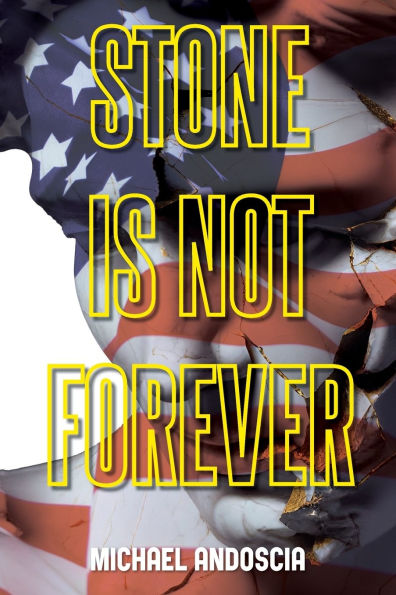
I’m also a writer. My most recent publication was an essay for Perspectives on History. I do have two published novels to my name. The first was called Stone is not Forever and the second is The Revelation of Herman Smiley. Both books were out of print for some time, but now Stone is not Forever is back and available wherever you buy books. I’m currently working on finding Revelation a new publisher as well as publishing some new manuscripts. Stay tuned!
I’m also an artist. I work in pencil, pen and charcoal as well as oil. I’m mostly self-taught. I’ve been away from the easel for a while but hope to get back into the arts soon.
In the meantime, I exercise my artistic yen by making YouTube videos. You can check out my YouTube Channel that includes a Sociology Class and a News Commentary.
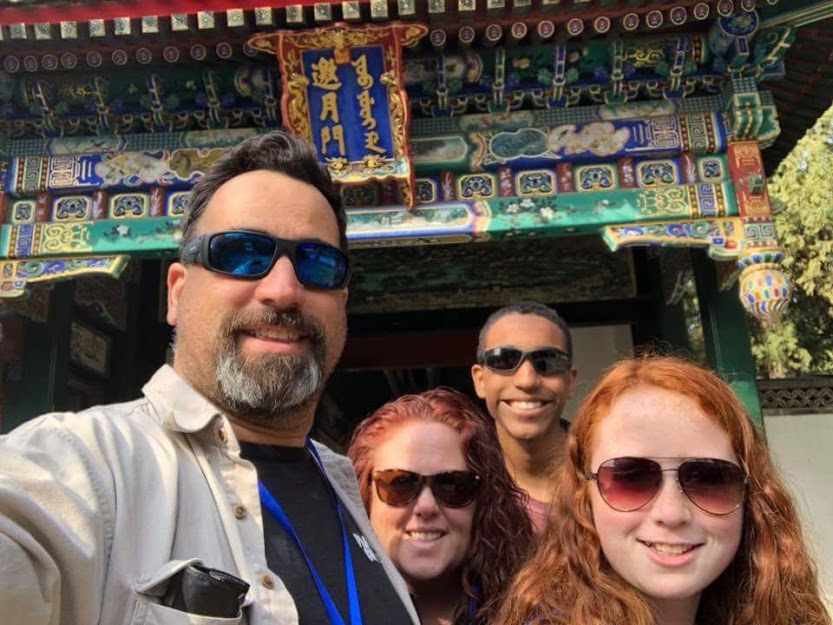
On top of all that, I’ve been married to the same wonderful woman, Dr. Jennifer Andoscia, for over eighteen years now. She is a behavior analyst and owner of ABA Results in Fort Myers and Gainesville. My son, Tekoa, is an artist working toward his mechanics certification. My daughter is attending Nova Southeastern University majoring in Marine Biology. She is also a talented drummer working with the NSU percussion line. I’m also the father of three dogs, a long-haired Chihuahua named Everest, a blind, deaf, albino Doberman named Falcor and a Golden Retriever named Aberdeen. I also have two tortoises, a one-eyed Gopher Tortoise named Wink and an African Spur Thigh named Efe.
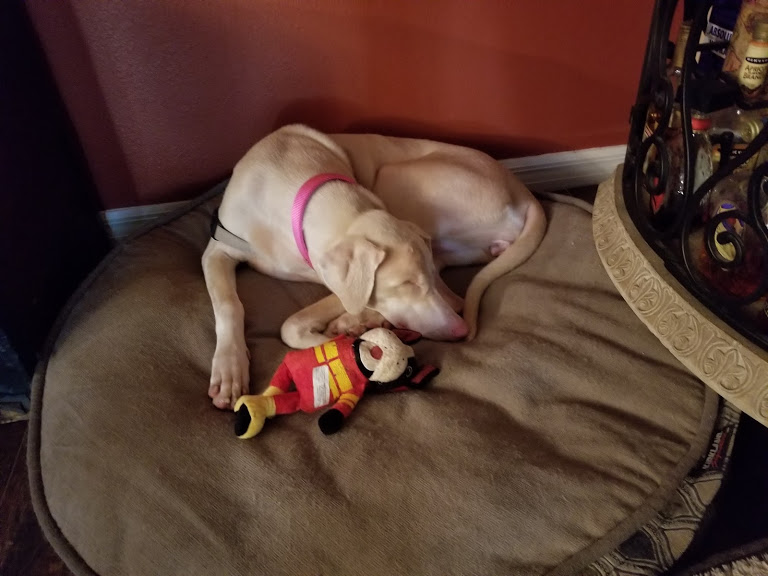
Falcor 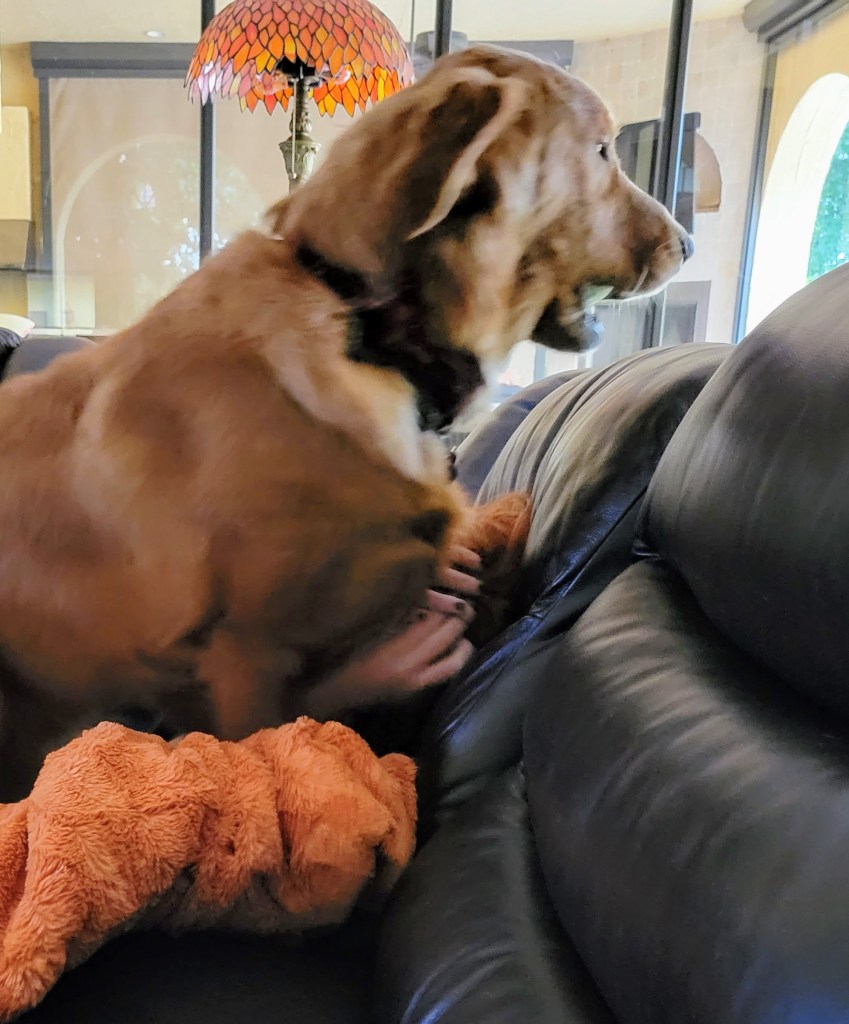
Aberdeen 
Everest 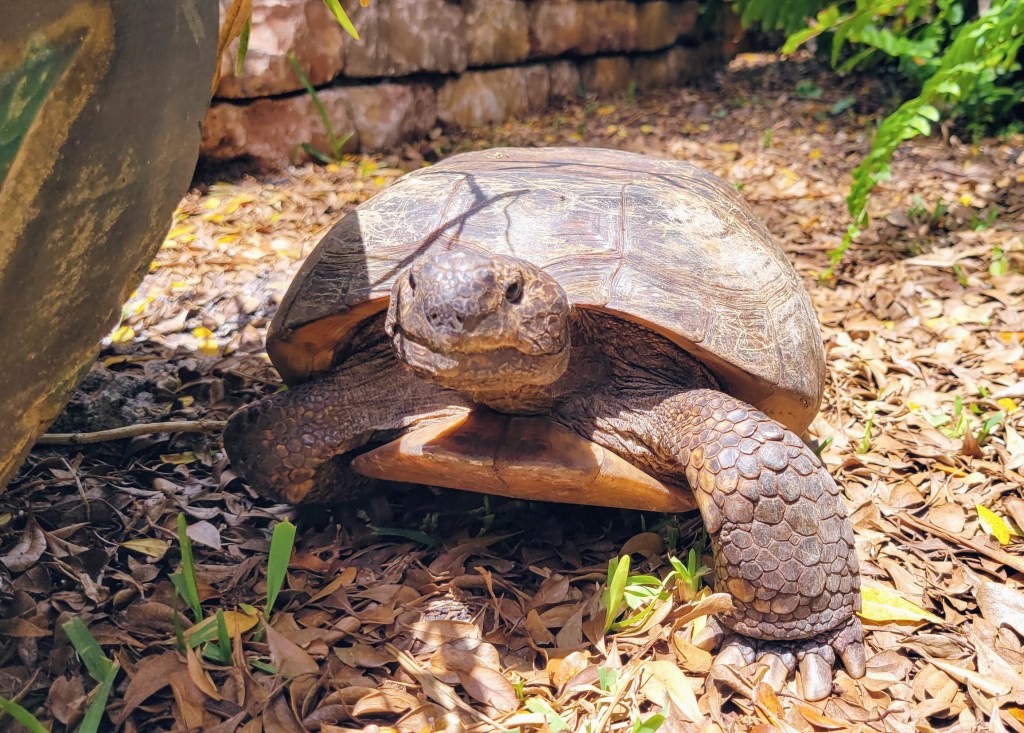
Wink 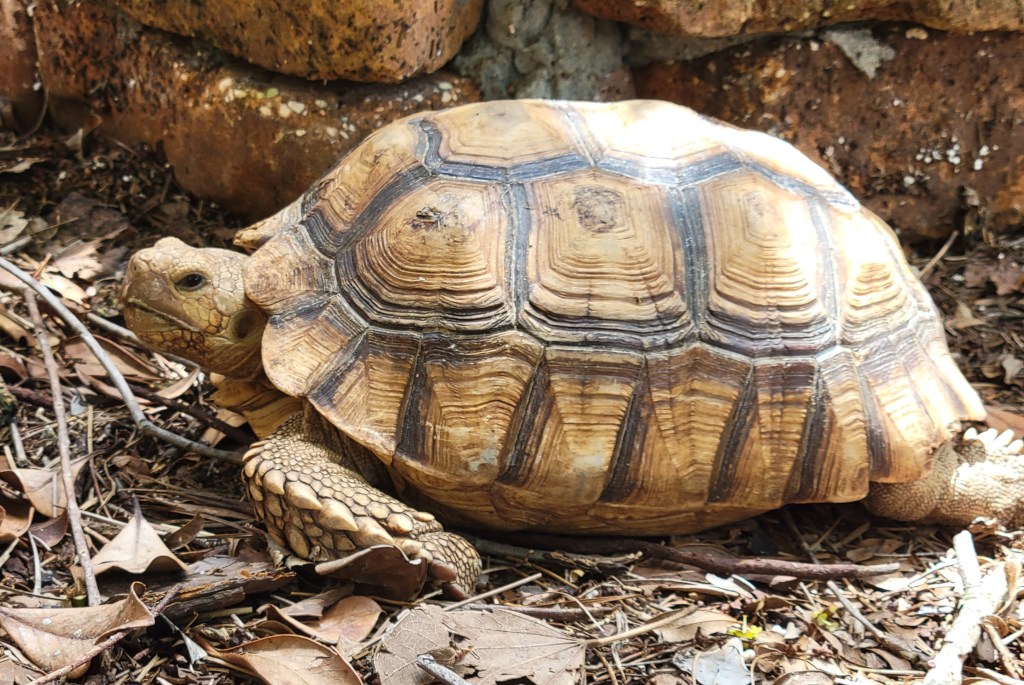
Efe
 Mr. A's Underground Classroom