
What 9/11 Taught Us About Humans and Social Anomie
[Note: The original essay below was posted on Substack and at the Mad Sociologist Blog. I debated posting this here because it’s more editorialist than I prefer for this site. I’m still vacillating on this decision. I’ll keep it with the caveat that it is clear that I believe actions like The Patriot Act, and the Wars on Terrorism, and the Torture Program were violations of trust on the part of our leadership during a crisis. This is, admittedly, a value judgement on my part consistent with the biases I have posted on the Mad Sociologist About Page. If a teacher is to use this post in their 9/11 discussions, they should, of course, allow for more room to debate among students.]
Since we have arbitrarily decided that years that end in a five or a zero are very important, and simple fractions of centuries, like 1/4, 1/2, 3/4, require recognition, I am obliged to offer an observation commemorating 9/11.
That being said, I’ve been working on a construction project in my Central Florida home under a heat index in and around 100o . So, I’m a bit fatigued and dehydrated.
That being said, the lessons of 9/11 are important and meaningful today. If I were still in the classroom, this is what I would be teaching, consistent with Florida statue 1003.42,1 student curiosity, and responsible pedagogy.
When students ask about 9/11, or this traumatic event comes up in the curriculum, it’s very easy to get lost in what we now know looking back. It’s easy to forget what those first few hours were like in the moment. The truth is, as it was happening, we knew nothing.
I my case, I was the high school teacher at a private school. My school director informed me that there were reports of a plan crash in New York City, and it was suspected that this was a terrorist attack. She warned me that parents were coming to pick up their kids from school, and that these students should be considered excused. She also told me that the other teachers were not planning on telling their students.

Get access to all Mad Sociologist, Underground Classroom, and Video Content, plus fiction and long form research at the Mad Sociologist on Substack. Click the Image to subscribe.
I had older students, so my immediate response was to return to the classroom and get the television going to find out what was going on. No small task. Our school had just opened that month and was lacking in nicities, like functioning audio visual equipment. We didn’t have cable. I had a small, black and white set that I plugged in, and had my students take turns serving as human antennae to try to get a picture.
When I saw both buildings burning, that told me that this was, in fact, a terrorist attack. As we watched the Twin Towers burn, we heard news of the Pentagon being struck. The United States was under attack! Our stomachs turned and pulses raced.
During this time it was up to me, as the teacher and the adult in the room to help my students contend with the unreal, surreal, hyper-real horrors they were seeing. I warned my students to avoid jumping to conclusions. I taught them that at times like this, information is scattershot, and impossible to evaluate. It was up to them to parse what we know, from what is conjecture.
Then we watched the South Tower collapse in real time on our little black and white set.
Within minutes, we heard about Flight 93 crashing.
About twenty minutes later, the North Tower Collapsed.
It wasn’t even lunch time yet!
At some point one of my students put her head down and said, “we’re going to war.”
Another student exclaimed through a strained voice that we should, “kill them all. We should just nuke the shit out of ‘em.”
To which I asked, “kill whom? Whom do we target, and how do we get them?”
I said something along the lines of, “look, we are all scared right now. And fear is often expressed as hate, and anger, leading to lashing out. It’s important, especially at times like these, that we think clearly, that we apply reason. In times of crisis, the hardest thing to do is to get past our emotional reactions and think about next steps. This is true whether you are in a car accident, or if your nation has been attacked or suffered a natural catastrophe. Rational thinking is always your best option.”
I mean, that couldn’t have been a direct quote, but it was along the lines of the lesson I provided for the rest of that day.
In fact, I specifically remember writing “Usama bin Laden” on the board before his name came up in speculation on television. By this point, all we had was audio coming from the television because everyone’s arms were tired.
What my students and I were contending with was a condition sociologists refer to as anomie, or a state in which the established norms and values are inadequate for the situation. Anomie constitutes a breakdown of what we understand as a social contract. It is the closest we come to the speculative “state of nature” many of our enlightenment thinkers, notably Thomas Hobbes, John Locke, and Jean Jacques Rousseau elaborated in their philosophies.
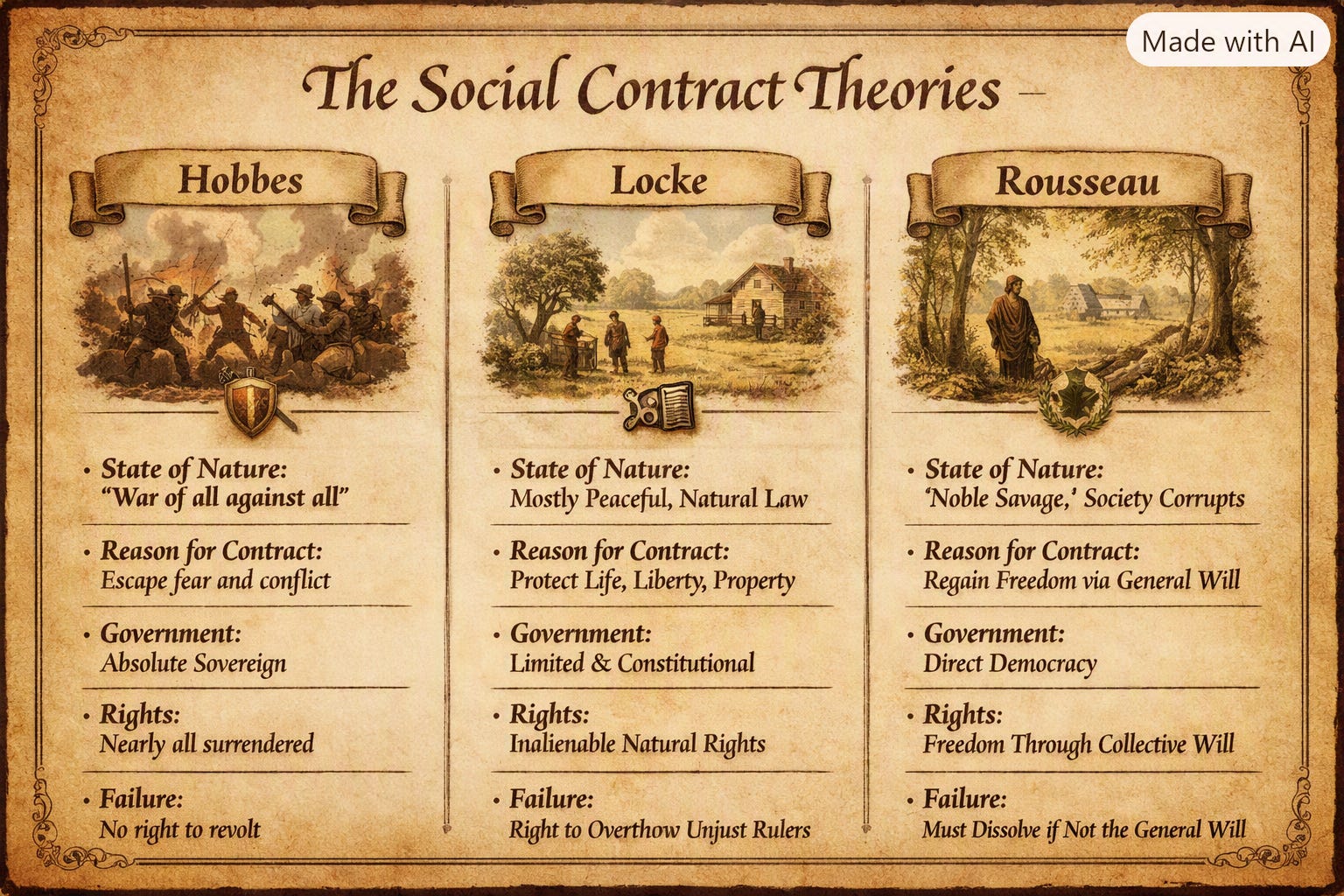
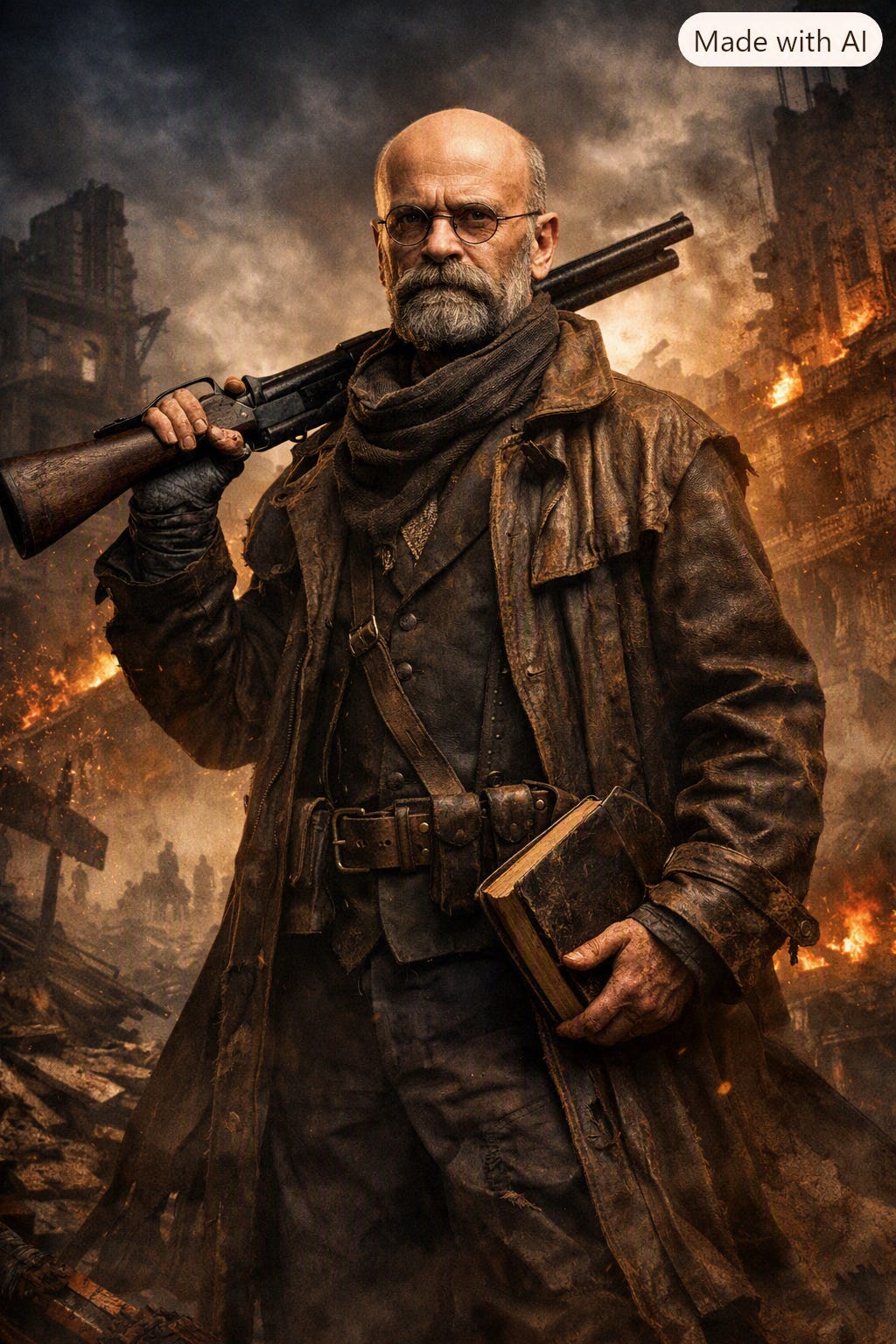
We’re all familiar with these concepts, because Anomie is the underlying theme of the ever-popular apocalyptic representations we enjoy on Netflix or in the movies. My wife and I are fans of The Walking Dead,2 though we have very different thoughts on how effectively these cultural expressions represent reality. My wife is the Hobbesian between us. This is consistent with the near universal themes of such shows and movies. When the norms and values break down what you have is chaos and disorder. Might makes right. Everyone is out for themselves and everyone is potentially homocidal. Therefore, all that is left is taking care of yourself and yours. Shoot first. Survival is all that matters.
I’m more of a Rousseauan philosophically speaking. I believe that people are intrinsically good. When people are bad, it is in response to social pressures. During times of crisis, human communities come together to offer mutual aid, to take care of each other. Anomie is an unnatural state for human beings, and we naturally work collectively to re-establish some kind of moral authority and collective consciousness. Ultimately, we try to restore a version of the world in which we are comfortable and our collective needs are met.
Of course, this is a sociology project. In sociology, when the topic of societal breakdown or anomie comes up, our go-to guy is Emile Durkheim. Durkheim, a French theorist contemporary to the late 19th, early 20th centuries, was interested in social cohesion and those factors that threaten or tear at the tendrils that cause a breakdown in social solidarity. Durkheim understood that human beings require moral regulation, social integration, and collective representations, to be fully functional and healthy, even free individuals. These are not, in and of themselves, instinctual or natural. They are social consequences.
Society defines right and wrong and that sense of shared expectations that guide our actions especially in relations to others. Social integration allows us a sense of community and a sense of self as being an important part of a larger human project. Collective representations are socially agreed upon symbols and actions that generate shared meaning to our endeavors.
Under normal circumstances, social systems are in place through which we can satisfy these requirements. During anomic times, these systems break down. Almost immediately after the initial crisis, however, human beings strive to restore the means by which they regulate moral behavior, integrate into a community, and create a sense of collective meaning. This is where apocalyptic themes often stray. During crisis, people tend to sequester themselves until the crisis ends, then often come together to rebuild.
That’s not to say that there are not shitty individuals who strive to take advantage of the normlessness. Humanity is always plagued by shitty humans. But apocalyptic stories, in true Hobbesian fashion, often present said shitty humans as the standard, not the shallow minority that they are in real life. Indeed, part of what communities will do after a crisis is to find ways to protect themselves from shitty humans. In doing so, however, they cannot turn away from humans in general. At least they shouldn’t. Humans are pretty important.
The first lesson we learn from 9/11 in retrospect is that Hobbes was wrong. The stories coming out of that tragic day, and the tragic weeks that follow, were those of humanity and heroism. Communities came together to help at Ground Zero. All over the country people gave blood, and donated their time and resources to helping the victims and the shaken community of New York City. This went beyond politics. It wasn’t polarized. There were no red-hats frothing at the mouth about “those people” in Blue cities.
We were all Americans. We were all hurting. We were all scared. And we all turned to each other.
We also turned to our leaders. And this is the second important lesson from 9/11. During times of crisis, the quality of our leaders is important. People standing in the rubble of Anomie will often turn to leaders. It’s not a democratic process. It happens organically. People will turn to established leaders out of a sense of continuity. Where such leaders do not exist, they will create leaders and collectively embrace those leaders. This is, for most human beings, the first step toward creating those collective representations by which individuals derive a sense of meaning.
This is where apocalyptic shows and movies often get it right…at least to a certain extent. During times of crisis, who steps into the leadership vacuum is often a matter of luck. It could be, in terms of The Walking Dead,3 a Rick Grimes, flawed, in over his head, but willing to do what was necessary to secure the people under his care, and to the best of his ability, prioritize right over wrong. For Rick Grimes, the crisis and th apocalypse is something to be overcome. Such leaders are often the heros of our apocalyptic tales.
On the other hand, we have the antagonists, most iconically represented by Negan, for whom “people are a resource.” The Negan characters are those who use social unrest as the means to power and status. Overcoming the crisis or the apocalypse is irrelevant because Negan’s status and position depends on the anomic conditions in which he rose.
Successful leaders, whether Rick Grimes, Tom Chandler4 style protagonists, or Negan style antogonists, do much the same out of Durkheim’s playbook.5 They use rituals to establish a sense of collective identity. They tell stories and use symbols, what Durkheim referred to as “representations” through which to establish collective meaning. To the best of their ability, they define what constitutes deviant or morally virtuous conduct. Where they are overwhelmed by the development of collective values, they affirm and reinforce them. Ultimately, such leaders must rebuild previous institutions like schools, churches, civic groups, and especially some form of governing body.
The difference is, when Rick invokes his inner Durkheim, he’s doing so for the sake of the group at large. He’s making the best decision he can for the sake of the community that has turned to him for leadership. Sometimes he’ll turn to that community for guidance. Sometimes, “this isn’t a democracy any more.” Then, when the time comes, it’s a democracy again, because sometimes he’s wrong, and he knows it. When he’s wrong, he deals with it.
Negan is making decisions for himself, and his own power. Democracy is not an option ever. Consequently, many of the rituals he uses to maintain his status are those demonstrating his violent power. Two polar dynamics. The same playbook. We can have Rick, we can have Negan.
After 9/11, the country came together around our leadership. Democratic, Republican, Independent. It didn’t matter. Everyone deferred to the George W. Bush, an historically unpopular president upon election,6 and his position as president during this difficult time. The United States was at war. Soon, we had a pretty good idea with whom we were at war. The President needed universal support against our deadly enemies. It was understood that the man standing over the rubble of the World Trade Center, with the American flag flying (a collective representation) must be assumed to be a Rick. He would dedicate himself to American safety and security and bring justice to the evil-doers, the terrorists who dared to strike at the United States.
Even we on “the left” were willing to give him the benefit of the doubt…but only to a certain extent. It wasn’t long before we realized that W wasn’t a Rick Grimes. He was much closer to a Negan. Within days, the Bush Administration presented the 131 page USA Patriot Act to Congress. This bill was, for the most part, a long-standing wish list from federal law enforcement authorities to water down privacy protections, consolidate surveillance power to the executive, and reduce judicial oversight of domestic spying—defining deviant and virtuous behavior.
It wasn’t long before the administration created paranoid tip-lines for Americans to report suspicious behaviors from their neighbors (TIPS: Terrorism Information and Prevention System). Watchlists were created through surveillance and data algorythms to place people on no-fly lists, or other terrorist databases without due process. One conservative think-tank, the Middle East Forum, saw this as a great time to create a Campus Watchlist to identify anti-American professors.7 Here we have an early precursor of TPUSAs Professor Watchlist.
The Department of Homeland Security was created—institution building—to further concentrate executive control over domestic law enforcement. Among the practices—rituals and symbolic representations—produced by the DHS was the color-coded threat levels between green (safe) and red (about to be attacked). Spoiler alert: the codes were never green. DHS further consolidated control of the U.S. border, including the formation of ICE, whom we all know and love!
It was during that Bush Administration that the theory of the Unitary Executive was promoted as a justification for the many abuses against civil rights that would be justified by the so-called War on Terrorism. Throughout this time there was almost no oversight from Congress. The mainstream press largely deferred to the executive. Anyone who thought to hold the administration accountable faced prosecution under the Espionage Act.
Then there was the nature of this War on Terror.
When my students mentioned above expressed their understandable desire for vengence and violent retaliation, my lesson turned to the historical nuances. 9/11 is often compared to Pearl Harbor. This may accurately reflect the emotional impact of the event, but not the historical reality. When I asked my student to explain who should be killed or “nuked” I explained this difference. Pearl Harbor was attacked by a nation state. This nation state had a defined geographic position. It had a government with individuals who could be held to account. These individuals also had the power to perpetuate or to end the war by surrendering.
Those who attacked the United States on 9/11 had none of those characteristics. Al Qaeda was not a nation state. If the place where it was located was destroyed, it could pack its bags and go somewhere else. Though there was a hierarchy, it did not constitute a state that could be negotiated with, or could surrender.
For a Negan, or a George W. Bush, it was a perfect war…one that could never end because it really wasn’t a war, it was crime. And so long as crime existed, which would certainly be true if treated as a war, alienating millions of people watching their homes destroyed and loved ones killed, and encouraging them to lash out further, the “war” would continue. The justifications for further consolidating power in the hands of the Unitary Executive.
And as Lord Acton reminds us, “power corrupts.” And when those in power are already corrupted…
The United States exercised the War on Terror by attacking Afghanistan, one of many nations in which al Qaeda was operating. Afghanistan and its ruling Taliban, a brutal, theocratic dictatorship to be sure, had nothing to do with 9/11. There is no indication that they ordered the attack. There were no Afghans on the planes. But Afghanistan, a nation already destroyed by war and civil strife, was destroyed again. At one point Pentagon officials were complaining that they had run out of places to bomb because everything was already destroyed.
The war in Afghanistan was almost universally accepted. The press asked no questions. There was little dissent from the public. That Afghanistan was an important throughway for natural gas, and consequently prime real estate for fossil fuel investment was shunned as irrelevant. Indeed, it was unpatriotic to mention it. After all, according to President Bush, “you are either with us, or you are with the terrorists.”
Before settling the war in Afghanistan, the Bush Administration decided to play its political capital by attacking a long-standing target. Iraq. Iraq had nothing to do with 9/11. The dictator of Iraq, Saddam Hussein, hated and was hated by al Qaeda and Osama bin Laden. None of that mattered. Bush wanted Saddam ousted and a friendlier government installed. Of course, this had nothing to do with all that oil sitting under Iraqi sand.
Iraq at the time was impoverished from over a decade of brutal sanctions. As I noted at the time, they weren’t even a threat to their own sand fleas because the nation couldn’t get the necessary “weapons” or pesticides necessary to control the parasitic infection cutaneous leishmaniasis. Despite this, the administration lied about Iraq’s possession of weapons of mass destruction, including nuclear missiles. The spector of the “mushroom cloud” over a major American city was invoked in every speech—collective representation.
In February of 2003, millions of people all over the world—global solidarity—gathered by the thousands in their respective cities to protest a war that hadn’t even started yet. I had the pleasure of participating in these protests myself. As a teacher I was under a great deal of pressure to conform to the general will demanding vengence against a nation that had never attacked us.
We attacked them anway.
These wars were the longest, most futile wars in our history. We took out the Taliban in Afghanistan only to fight a protracted war, spending billions of dollars and destroying millions of lives, including Americans. The end result was a return of the Taliban. In Iraq the U.S. quickly dispatched Saddam’s government, but ended up quagmired for years. In the process of these two wars the United States abandoned the values that it always professed to uphold. Most appallingly, American forces tortured people—ritual violence.
The twenty-fifth aniversary of 9/11 is important. Arguably just as important as the twenty-fourth and the twenty-sixth. Unfortunately, when we are asked to “never forget” 9/11 and we see the memes and images of the burning towers—collective representations—we are encouraged to remember the the pain and fear, and the bravery and dedication of our troops in fighting the so-called “war” on terror. The theme of this rememberance is “never again.”
We are not expected to ask questions. What does “neve again” mean in the interests of deferring power to the state to impose limits on its citizens for the ostensible aim of “safety?” Was the course of action taken, the only possibility, or were there other options. Al Qaeda was not a nation against whom it was reasonable to “declare war.” It was, and remains, better defined as a criminal syndicate. So, would an international dedication to law enforcement strategies have been a better option? One that would have directed justified response agains those actually responsible for the attack, without killing millions of innocent people? What were the consequences of empowering a President as we empowered George W. Bush? Was he worthy of this trust? What were the costs?
Those who design much of the curriculum in this country would have you believe that asking such questions is unAmerican. Nothing could be further from the truth. From 9/11 we learned in the indefatiguable values of the American people to turn out for each other in times of need and crisis. We further learned that those who rise as leaders should not automatically claim our loyalty, for those in power may exercise that gift for themselves rather than the good of the citizens.
These lessons are a course in American story since its beginning. That we ask such questions is even more important than the answers we come up with. Because crisis will happen again. We will all be called upon to respond to to the challenges of history collectively at a time when everything we know and love and take for granted seems to be collapsing around us. At such times we will need to think and respond rather than react to fear and anger and hatred.
Footnotes
- This statute requires “The events of September 11, 2001” to be taught. It futher requires that this lesson be factual, free from distortion or suppression of historical events, and not influenced by teacher personal views. Not sure what any of this last part means. I mean, I was alive at the time and participated in the political debates around the event. So, yeah, my personal views are going to be unavoidable as compared with a teacher who is twenty-three. But I will endeavor to be as objective as I can be and still remain human. ↩︎
- I used to do a class on the sociology of the Walking Dead. ↩︎
- The Walking Dead is, in my opinion, the most iconic of this genre. ↩︎
- My wife and I are currently watching The Last Ship. We see many of the same themes mentioned above. It’s more contemporary than The Walking Dead, but I don’t believe it’s as iconic. ↩︎
- I should say “playbooks”. The books I’m referencing are as follows:
Durkheim, Émile. 1997. The Division of Labor in Society. Translated by W. D. Halls. New York: Free Press.
Durkheim, Émile. 1951. Suicide: A Study in Sociology. Translated by John A. Spaulding and George Simpson. New York: Free Press.
Durkheim, Émile. 1995. The Elementary Forms of Religious Life. Translated by Karen E. Fields. New York: Free Press. ↩︎ - Notably, he remained unpopular even after sending everyone a so-called “refund check.” ↩︎
- This list was destroyed by activists, including myself, demanding to have their names added to it…thus making the list meaningless. ↩︎

